|
Ministers challenged over social exclusion
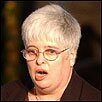 |
| Minister: Roche |
As independent reports urge greater action to tackle social exclusion, ministers have announced a new strategy to help people on low incomes gain access to jobs and public services.
A report from the Social Exclusion Unit, backed by ministers from six departments, set out how improved access to transport could "improve life chances and opportunities for people on low incomes".
It called for improved travel information at Jobcentre Plus offices, transport to healthcare organised around the needs of the patient, and revised planning guidance so new services are easier to reach.
Transport minister John Spellar said the issue wasn't just about transport but also about providing public services in a way that makes them easier to access.
And social exclusion minister Barbara Roche added: "The Unit has set out a framework of practical measures for helping people facing exclusion get to jobs, schools, healthcare and other services they need.
"This will make sure everyone can start to benefit from improvements to public services and we can build a lasting network of secure and accessible neighbourhoods."
The move came as the government was urged to do more to tackle social exclusion and improve cooperation with community groups.
The Joseph Rowntree Foundation urged the government to face up to the "central challenge" of tackling the social disadvantage that has accompanied a widening gap between rich and poor.
In a discussion document published on Wednesday, the social policy charity warned that if the economy continued to expand in the next 20 years at the same rate as over the last two decades an extra £500 billion would be generated - and only £25 billion would be needed to close the poverty gap completely.
But the authors said that to reduce levels of relative poverty the government will need to adopt policies involving direct redistribution.
"In the last 20 years, households on middle incomes have enjoyed an income increase of almost 50 per cent in real terms. The incomes of the poorest households rose more slowly or stagnated, resulting in a far steeper rise in relative poverty than elsewhere in Europe," said David Darton, co-author of the report.
"Recent policy changes have begun to reverse this trend, but sustained action will be required for years to come before this scar on our economic and social landscape is removed. If we want a more inclusive society contributing to our prosperity in 20 years time, then discussions need to start now on the strategy to achieve it."
Also on Wednesday, think tank Demos challenged ministers over their use of community groups to tackle social exclusion.
The Demos report, which Roche helped launch, concluded that the government was right to bring in voluntary groups to help communities but warned they were being used as "instruments of government policy".
Community groups are increasingly being brought into urban regeneration projects as they are viewed as having developed trust by filling the gaps left by mainstream services.
But the survey of 40 community-based projects concluded that local and national officials had failed to recognise that they are not conventional service providers that fit into the professionalised or bureaucratic culture.
"You've got a David and Goliath situation, where local groups don't speak the same language as the official bodies that they are asked to work with," said Helen McCarthy, the report's author.
"It's the fact that they are people-based rather than paper-based organisations which enables them to reach out to the community. These groups see empowering people as a priority - not delivering government policies."
|


