|
Politicians and campaigners mark Human Rights Day
Britain has marked Human Rights Day by ratifying the optional protocol to the United Nations Convention Against Torture.
The protocol aims to prevent torture and other forms of ill treatment by establishing a system of regular visits by independent international and national bodies to places of detention.
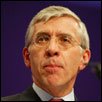
" I am proud of the UK's leading efforts in the campaign to prevent torture worldwide," said foreign secretary Jack Straw.
"Our ratification does not signal the end of our efforts. There are too many places in the world where torture remains an everyday threat."
A committee of 10 independent experts will be set up and conduct regular visits to places of detention alongside national commissions.
However the protocol will only come into force when it has been ratified by 20 states.
Other ministers are also marking the 55th anniversary of the Universal Declaration of Human Rights.
Constitutional affairs secretary Lord Falconer speaks at a Human Rights Day seminar at the County Hall Gallery in London.
And Foreign Office minister Bill Rammell, former UN high commissioner for human rights Mary Robinson, Labour MP Roger Berry and Amnesty International UK director Kate Allen all speak at a parliamentary reception.
The Commonwealth conference in Nigeria last weekend was dominated by human rights issues related to Zimbabwe and the regime of Robert Mugabe.
Ahead of the events, Rammell said Britain had a duty to take on failing regimes.
"The old excuse 'you are interfering in our internal affairs' is simply no longer a valid response to legitimate criticism," he said.
"States where human rights are gravely violated, because the rule of law has broken down or because only repression and violence can sustain a ruling clique in power, are the main source of risk to our and our allies' security.
"Promoting democracy, human rights and the rule of law is right at the heart of working for our interests."
At the UN in New York a special posthumous honour will be awarded to the late high commissioner for human rights, Sergio Vieira de Mello, who was killed on duty in Iraq along with 21 others earlier this year.
Campaigners marked the day with a claim that Britain is falling behind other countries on regulating the arms trade.
Amnesty International claimed Britain had been overtaken by countries including Brazil, Cambodia and Finland on the issue of an international arms trade treaty.
"The UK, the second largest exporter of weapons, must now follow their lead and sign up to legally binding arms control," said Kate Allen, director of Amnesty International UK.
"Without such a commitment their responsibility to uphold the Universal Declaration on Human Rights can be little more than hollow words."
Liberal Democrat leader Charles Kennedy joined the calls for a treaty.
"The arms trade is potentially the most deadly trade in the world; it is vital that there should be binding international regulation," he said.
"If, as a nation, we are serious about protecting human rights and working for peace, then Britain should back an arms trade treaty."
|