|
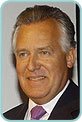
Peter Hain MP, Trade and Industry Minister
Peter Hain MP
Question: The North-South divide, is there still a major disparity?
Peter Hain: Yes at least, in the sense that parts of the north have got very high levels of economic inactivity and higher levels of unemployment than in the south east.
Question: So you have been in power for four years, what are you going to do to bridge this divide?
Peter Hain: We have established regional development agencies which are taking forward the regional agenda. We have also placed a huge injection of spending power into deprived parts of the country, whether this is south Wales or the north of England, in terms of the minimum wage, working families tax credit, tax changes generally, and then of course specific schemes like the Miners Compensation Scheme which is injecting literally hundreds of millions of pounds into areas that have suffered from the contraction of the coal industry. There are other ways in which we are doing it, but I think we have closed what was otherwise a widening gap.
In the end what we have got to do is help the north to be more competitive and the injection of funding to regions like the north west, north east, south Yorkshire and Corwall together with Wales will help get it there.
Question: Do you think there is a strong case for regional assemblies in England?
Peter Hain: I have long been in favour of elected regional assemblies and the party is in principle committed to it. The establishment of RDAs on the one hand and appointed chambers on the other is effectively a dress rehearsal for what I think will in time be an evolving pattern of regional government. I don't think it will happen over night but I think that is the future.
Question: Turning to the bio-tech industry, how committed are you to Britain becoming a leading player in this industry?
Peter Hain: Well I think we already are a significant player. What I would like Europe to be is a major player which is where the agreement between Prime Minister Wim Kok, the Dutch Prime Minister, and our own Prime Minister Tony Blair to take this agenda forward is really important. It is one of the most important knowledge based industries of the future. We have a significant capacity to be in it and we ought to drive that forward and I think there is great potential for it. It doesn't mean that you have to be pro-GM or anti-GM you just have to be pro the potential for bio-technology to solve a lot of the problems that we have in the world and to bring forward solutions that nobody has ever thought about.
Question: Isn't there a problem of balance - you have got to sell Bio-tech to the public by promising strict safeguards, but then the bio-tech industry argue that this in return cripples their development?
Peter Hain: Clearly it has got to be safe. Clearly we can't allow the science and the technology to lead the politics by the nose. But the proposition that Britain should opt out of bio-technology and just leave the field clear for the Americans in particular, and one or two others, to lead the way, in what is going to be one of the most crucial technologies of the century, following IT, is just ludicrous really.
Question: What more can the biotech companies do to win over the public do you think?
Peter Hain: I think be more open, be less anoraky and be prepared to have an honest appraisal of the pros and cons rather than to just put one side of the argument.
Question: Take Europe post-Lisbon. How can Europe do you think have the world's strongest economy by 2010, which is the ambition, when individual nations can still put a brake on the pace of economic reform. Look at how France has resisted the liberalisation of the energy market. Open co-ordination didn't seem to work there did it?
Peter Hain: We were disappointed in the outcome of Stockholm in respect of energy liberalisation. There were other advances, but the European Commissioner is very strongly supportive of the British agenda and the European Commission was instructed by Stockholm to come forward with it's directive on energy liberalisation. So there is everything to play for still. The argument may not have been won on a target for implementation which was resisted by the French and the Germans, against the general majority view which is the encouraging thing to remember, but I think it will return.
Question: Their blocking tactics went against the spirit of Lisbon didn't it?
Peter Hain: I think it was disappointing in the sense that Lisbon lit a torch for economic reform in Europe, which Stockholm has carried forward in other respects, but in respect of energy liberalisation it has been dimmed. But it is still burning there because as I say the commission has the duty and the obligation to bring forward it's directive fairly soon and we will obviously be pressing for that to be in a form that will enable it to be taken forward. I don't think the argument is over at all, I don't think it can be over because I don't think Europe can stop the world and get off on the basis of high energy prices because it can't be competitive on that basis.
Question: Our EU counterparts say that Britain is being obstructive on worker rights and consultation. Why is that?
Peter Hain: I don't know, you will have to ask them. I don't think we are being obstructive. I think we've had quite good co-operation on this.
Question: Well the issue is about information and consultation to workers, what is your big political objection to the directive?
Peter Hain: We have no objection to either of those principles of information or consultation as they are the ones that are pretty vital to the successful functioning of a modern economy. You cannot operate by management diktat. You need to engage with the whole of the workforce because their skills and their knowledge are so crucial to make modern enterprises work in the information age. So, it is not a question of rejecting the principles. But the important thing is to do without a whole load of new regulatory bureaucracy which has been the difficulty.
Question: Germany are now going to be voting against you, do you think you will have to do some kind of compromise on this at the next European Council or are you going to push it through by qualified majority voting?
Peter Hain: I wouldn't anticipate how the next Council will decide this.
Question: Turning to renewable energy. At present 2.8% of our electricity comes from renewable energy. How realistic is the target of securing 10% of electricity from renewables by 2010?
Peter Hain: I think it is realistic because there is an obligation on behalf of every generator to take 10%, so there is a big incentive there.
Question: But what are the obstacles?
Peter Hain: The obstacles are the capacity to deliver that. Which is why we have announced a quarter of a billion funding, including the £100 million of additional money the Prime Minister put forward a couple of weeks ago. That will help with the capital projects and research and development. I regard myself as a champion of renewable energy. I think it is going to play a huge and significant future in British energy policy.
Question: Should we see a second term Labour government, how big a priority would renewable energy become on your list?
Peter Hain: Well I think it will be top of the energy policy list. You have a 5 per cent objective in two years time and that is going to be a stiffer target for us to reach than the 2010 target. So achieving our 2005 target is going to be a huge challenge which we will attempt to meet.
Question: When you came to the DTI, the Conservative DTI spokesman, David Heathcoat-Amoury said that you should end your membership of CND before you take over stewardship of nuclear policy. He questions whether you can be objective about nuclear policy and be a member of CND. What would you say to him?
Peter Hain: That is a typically infantile jibe, which is sadly all I would expect from him. I am not going to stop paying my £15 to Wales CND because some Tory asks me to. I think if you ask CND do they agree with the government's policy on nuclear energy, they would say no, and I am responsible for the government's policy on nuclear energy, and I am very happy to be so.
Question: So government always comes first over CND on nuclear policy?
Peter Hain: As I say all I do is pay £15 a year to Wales CND to help good people doing good peace work and I am responsible for government policy.
Question: Looking to the election. You have been critical of the government's 'Middle England' narrow focus in the past, but when it comes to a General Election, 'Middle England' wins elections. So 'Middle England' wins over the core vote?
Peter Hain: I put an argument forward a couple of years ago that we needed to listen more closely to our core vote which was pretty restless. That has been achieved. A whole series of policy measures have been adopted which have meant that our heartlands vote is now much more content. But it was never a question of the one versus the other. You need both, and I think we are now in a position to win both, and I am very pleased with the way things have developed and that is reflected in much greater contentment in heartland areas.
Question: Some people in the Labour party say there is no such thing as a core vote. Would you agree with that?
Peter Hain: No.
Question: So what should the government be saying to the core vote for this election?
Peter Hain: Well what we are saying, is you need economic stability, you need low interest rates, you need more jobs, a million more jobs have been created. If you look at what we have done for our traditional Labour supporters, it has been incredible, from the statutory minimum wage - which was an historic achievement, through to the New Deal - which has produced an extra 280,000 jobs for people on the dole, to family tax credit which is a really serious anti-poverty measure, to massive increases in child benefit, to huge boosts for poor pensioners. One of the reasons I think that lower income groups in Britain now feel that it is their Labour government and they want to re-elect it, is that these policies have been put in place.
Question: Some argue that in the first term, there has been a problem about building up expectations and delivering. Do you think that is something that needs to be addressed in the second term. Is there too much spinning for example?
Peter Hain: I don't think that is the issue, I think there is a problem with journalists. I think the climate of political coverage in Britain is very prone to journalistic spinning at the moment. I do think that it has been harder to deliver what we wanted to deliver because the capacity of government is much more limited than impatient ministers like me are satisfied with. That is something which we need to get right in the second term, if we get one.
Question: You talked about renewable energy being a big priority. What would be the other key priority areas do you think in the Trade and Industry department in a possible second term?
Peter Hain: The number one priority is making Britain competitive, increasing our productivity, and the productivity is still low, despite the advances we have made. We have made big strides forward. But there is still not enough long-termism in British public policy towards industry and towards business. Whether that is the provision of low cost loans, long term loan finance - especially for small and medium sized enterprises, whether that is in terms of our skills base, which is still short of where it needs to be, although we have made strides forward. Or whether it is reducing the burden of regulation whilst ensuring industry meets it's social and environmental obligations. These are all issues which we need to take forward.
Question: Picking one of those out. What can you do about long term planning and funding for SME's?
Peter Hain: So many SMEs still complain to me about a hostile attitude from banks towards loans, and although we have made regional development agencies and the idea of regional capital funds, venture capital funds, which the Chancellor announced in the budget, which are all moves in the right direction, we need to do much more in this area. We want to have a system of institutional finance which seeks to support business, rather than to leech off it. And that is not the situation at the present time.
Question: Is there a country that we should look to as a model?
Peter Hain: We can draw different lessons from different countries. The Americans have got a fantastic record of venture capital. They take risks without blinking The Germans on the other hand, their banking systems take stakes in local businesses rather than just give them a loan for two years and tell them they have got to pay it back at some ridiculously high rate. So I think there are different models which we can synthesise.
Question: Isn't there a cultural issue, that British industry is conservative with a small 'c'?
Peter Hain: British Banking is conservative with a small 'c', and I think British institutional finances. We have got some good venture capital funds, but they don't reach 95 per cent of SMEs. If we are going to have fast growing SMEs sector, the knowledge based technology, hi-techs sector, then we need really red tape free, low cost loan finance available.
|