|
Judicial independence 'in peril'
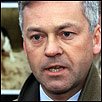 |
| Alan Duncan |
The Conservatives have slammed government plans to establish a Supreme Court for the UK.
Shadow constitutional affairs secretary Alan Duncan said ministerial plans were a "perilous step backwards because it will extend the influence of the executive over the judges".
His comments in the Commons on Monday came after secretary of state Lord Falconer told peers that the time had come to separate Britain's highest court from the workings of the House of Lords.
"The government’s view is that, as part of our plans to sustain and enhance the vital independence of the judiciary, the present position is no longer sustainable," said Lord Falconer.
Under the proposals 12 "justices of the supreme court" would be chosen, with two from Scotland and one from Northern Ireland.
Appointments will be made on the recommendation of a new Supreme Court Appointments Commission, which will be convened when there is an actual or impending vacancy.
The commission will consist of members of the appointments commissions from across the UK. This "guarantees nominations free from political influence" said the Cabinet minister.
The president of the supreme court will chair the Appointments Commission, and the deputy president will also be an ex-officio member.
When a vacancy arises the commission will recommend to the secretary of state a minimum of two and a maximum of five candidates.
The Cabinet minister would then consider the nominees in relation to a statutory duty to ensure sufficient experience of the law in each UK jurisdiction.
"There will also be an obligation to canvass the views of the first minister of Scotland, the first minister of Wales and the first minister and deputy first minister of Northern Ireland if responsibility for criminal justice matters has been devolved to the Northern Ireland assembly," added Lord Falconer.
Responding to the announcement, Alan Duncan said the government was giving the impression that it was "making it up as it goes along".
The proposals were unveiled in a "piecemeal" manner following the last government reshuffle, he argued.
"The statement today gives the impression that the government is making it up as it goes along," Duncan said.
"It contains no intellectual coherence at all, and rather it contains many practical dangers and backward steps. It is a mess."
He also warned that the legislation would not have its intended effect.
"This proposal may separate the judges from the legislature, and for no apparent benefit at all, but it is a perilous step backwards because it will extend the influence of the executive over the judges.
"How can it be said that this proposal enhances either the separation of powers or the independence of the judiciary, when the role of the secretary of state...has been made central to the proposed judicial appointments procedure?" he asked.
|


