|
Blair secures narrow victory on fees vote
The government has narrowly seen off a rebellion on top-up fees following a day of high drama around the Palace of Westminster.
Following weeks of arm-twisting - coupled with a series of concessions - ministers saw the Higher Education Bill pass at second reading with a majority of just five.
A total of 316 MPs voted for the Bill, while 311 voted against, producing the smallest majority for Labour since it took office in 1997. Some 72 Labour MPs are thought to have voted against the legislation, with a further 24 abstaining.
Responding to the news, shadow education secretary Tim Yeo said the result was an "utter humiliation" for the government.
And Liberal Democrat leader Charles Kennedy said that it was a "hollow victory" for ministers.
"It's certainly not a victory for future students, particularly those from poorer backgrounds, who will face massive debts. And it's not a victory for universities, who will still be under funded," he added.
While ministers will be relieved to have secured passage of their Bill, there will be dismay among the top levels of government that despite their majority shrunk to single figures.
Many Labour MPs had highlighted the way in which the plans were developed inside Number 10 as a key reason for their anger.
Downing Street has now been warned that it cannot be confident of securing the passage of policies developed in this way.
The narrow margin also came as a surprise - following the earlier defection of Nick Brown, a leading rebel against the top-up fees policy.
The former chief whip denied that he had been forced to act by the chancellor, insisting his decision was based on "the merits of the case".
"The devil is in the detail and we've got a lot. We have those steps towards a market economy in higher education firmly boxed in," he said.
But the backbencher conceded that he had failed to get movement on the issue of variable tuition fees.
Brown also said he was backing the government after being told that the forthcoming spending review would make money available to fulfil the recommendations of the independent review of top-up fees.
Addressing MPs education secretary Charles Clarke said the problems facing universities were "real and substantial".
Saying that the government had listened to its critics, he warned that failing to reform student finance would have severe consequences.
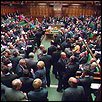
"Our decision today in this House - the vote of every single MP of all parties - will determine the future of our universities and so determine the future ability of this country to prosper in the increasingly competitive global economy," he told a packed Commons chamber.
"Despite all the entertainment of all the different forms of political speculation, we should all acknowledge today the outcome of this debate will be real and substantial for this country's universities and the future welfare of this country."
Number 10 had earlier insisted that the fundamental principles of the bill were remaining intact.
The prime minister's official spokesman said there would be "no changes to the bill" and "no extra money".
But he added that further legislation could be introduced if the government-commissioned review identified major problems with the funding system.
Over recent days media focus shifted to the chancellor, who is thought to have won over his supporters with a pledge of extra funding if the system hits those from poorer backgrounds.
But with education ministers denying that extra funding was being made available, questions remain over what deals the government may have done with its own backbenchers in order to achieve the safe passage of the legislation.
|