|
NHS readmissions jump
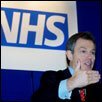 |
| Under fire: Blair faces more bad news |
The number of discharged NHS patients who return to hospital as emergency cases has increased, according to figures released by the government.
Data published by the Department of Health showed nearly two thirds of hospitals saw a rise in the number of readmissions.
The figures, which will fuel calls for a major cash boost for the NHS, also reveals a significant increase in bed-blocking by elderly patients who need long-term care as a result of a shortage of care home beds despite a £300 million budget.
Early releases by English hospitals in a bid to push down waiting list times is also seen as a key factor for the alarming rise.
Statistics
The statistics for 2000/01 published on Wednesday also show improvements in the survival rates of cancer patients - by more than two per cent - and those undergoing life-threatening surgery.
Health ministers are angered by one part of the findings that showed the number of patients waiting six months to be admitted to hospital has remained almost unchanged for the past two years. Over 100 hospitals actually saw the numbers rise, the report found.
Nigel Crisp, chief executive of the NHS, warned NHS trusts they would have to take action to see an improvement.
"Every hospital and health authority must take a long, cold look at these figures and take real action to deal with problems," he said.
"The culture of openness and disclosure in the NHS is here to stay. The health service belongs to the public and they must be able to see how it is performing on clinical and public health measures."
Mismanagement
The shadow health secretary, Dr Liam Fox, believes that "Labour's chronic mismanagement of the care home sector" is leading to beds being blocked by patients with nowhere else to go.
This, he says, is putting pressure on NHS trusts to discharge patients early in order to free-up places.
"The Conservatives have pointed out to the government countless times over the past two years that if they failed to tackle the care home crisis, the result would be bed blocking and increased readmission rates. Perhaps now they will start to listen," he said.
"The government only has itself to blame for this alarming level of emergency readmissions. More and more patients are waiting to get into hospitals and therefore under enormous pressure to discharge patients as quickly as possible."
Lib Dem health spokesman, Dr Evan Harris, believes that government targets on waiting lists have contributed to the situation and condemns the sending patients to private hospitals abroad.
"The figures for delayed discharges are shocking, and it defies belief that the government doesn't release capacity by tackling this waste, rather than throwing money at private sector contracts," he said.
"The distortions caused by this exercise are obvious. Urgent cases are delayed in order to meet political targets for long waiters, and the waits for the most urgent patients aren't even measured."
"Hospital readmission statistics are a damning indictment of the way government targets have forced trusts to discharge patients too early, in order to get trolley waiters in."
Delays
Of England's 110,000 NHS beds, nearly 6000 at any time are blocked by patients whose discharge has been delayed.
An average six per cent of patients had their discharge from hospital delayed, ranging from Croydon (zero) to South Essex (15.1 per cent).
Over 500,000 patients were readmitted during in the same period - with 10 health authorities seeing an increase of 10 per cent and one in five trusts readmitting seven per cent.
Crisp acknowledged that readmissions were "one area where it is reasonable we should ask wider questions". He argued that the figures showed a new culture of transparency in the NHS.
"Every hospital and health authority must take a long, cold look at these figures and take real action to deal with problems," he said.
"This is part of the process to encourage honest debate about the state of the NHS. The culture of openness and disclosure in the NHS is here to stay. The health service belongs to the public and they must be able to see how it is performing on clinical and public health measures."
|


