|
Blair paves way for euro poll
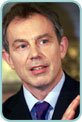 |
| Blair - renewed urgency |
Tony Blair has given the clearest warning yet that Britain risks being left behind unless it joins the single currency.
Speaking in Birmingham on Friday, the prime minister said that Britain has too often stood back from key developments in Europe's history.
He told his audience that Britain's involvement in Europe has been a tragic "history of opportunities missed in the name of illusions".
Blair said: "At each stage the British refrain was the same - first we said it would not happen, then we said it would not work and then we said we didn't need it. But it did happen and Britain was left behind at each step of the way."
No Change?
Number 10 has denied that the speech represented a change in policy on the euro. A spokesman said: "He will make clear that the policy is unchanged and that being strong in Europe does not mean joining the euro come what may."
However, Downing Street says Blair believes it is important that people understand his assessment of where Britain is as a country and where Britain has made mistakes in Europe.
Some see the speech as evidence of a renewed sense of urgency in the campaign to get Britain to join the eurozone. Gordon Brown is said to have reassured colleagues in recent days - telling them he backs British membership of the single currency.
Government sources continue to claim that the final decision on the single will be taken based on a "hard-headed" economic assessment.
The prime minister said that the five economic tests have to be met - although he warned that "anti-Europeanism is completely contrary to Britain's self interest".
Blair is said to believe that the current debate is "cloaked in a sceptic mood" which, he maintains, does not reflect the true feelings of the British people.
But he stressed that being in the EU does not mean walking "untroubled or uncritical" into everything that Europe does.
"It is precisely because we both need Europe and Europe needs reform and change that Britain's participation in Europe is essential," he said.
"To proclaim Europe's success and advocate our part in it is not to deny Europe's requirement for change," Blair added.
Past Failures
As the government moves up a gear in its effort to persuade the public of the merits of the euro, he said that politicians have often failed to realise where Britain's real self interest lay.
"The tragedy for British politics and for Britain is that too many politicians have consistently failed - not just in the 1950s but up to the present day - to appreciate the emerging reality of European integration. In so doing they have failed British interests," the prime minister told his audience.
The prime minister's official spokesman said that Blair believed that Britain was still paying the price for not being a member of the EEC from its inception.
"He will identify as the greatest missed opportunity of all the failure to be in there at the start when it was founded in 1957 - only later to realise the mistake and join in 1973 when the rules and the deals had all been worked out without us," said the spokesman prior to the speech.
Blair said people recognised that the EU has delivered "enormous benefits" of "peace, stability, social justice, prosperity and free trade".
Interdependence
A "network of interdependence" has helped countries to develop "stable and prosperous democracies and two generations of peace," Blair said.
In what is being seen as one of his most pro-European speeches to date, the prime minister argued that Britain belongs at the heart of European affairs.
"In today's world Britain has greater strength and influence as a key European player," he said. "As each day goes by Britain is successfully nailing the myth that we have to choose between being a strong ally of the US and strong in Europe. Our mission to do both - will continue to do that."
Blair's comments were echoed by the home secretary, David Blunkett, in a speech made in Spain. Addressing the world in the aftermath of September 11, the home secretary said: "The message of the 21st century is a very simple one - that we sink or swim together."
The timing of Blair's speech is being seen as significant following the events of the last two weeks. Insiders suggest Blair is moving quickly to consolidate his position in order to ensure that the chancellor, Gordon Brown, is forced to reverse his recent scepticism on the single currency.
Some suggest that Brown himself is softening his position in relation to the single currency as part of a wider move to prepare the way for an early referendum on British membership.
|


