|
Straw calls for greater EU transparency
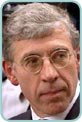 |
| Euro player: Straw will reaffirm Britain's EU commitment |
Jack Straw has reaffirmed the government's commitment to be a major player in Europe and called to for the EU to make its dealings more transparent.
In a keynote speech in London the foreign secretary will reinforce the benefits of EU membership and enlargement. He will argue that the European Union needs to be "better understood and better liked".
He delivered a scathing rebuke on eurosceptics saying they were rigidly against not just monetary union but the EU itself.
"Many of those politicians who describe themselves as eurosceptics today are neither undecided nor open to persuasion. They have made up their minds about the EU, and they are firmly against it. They are not sceptical of European Union but rather resolutely opposed to it," he said.
The foreign secretary said he wanted a dialogue with the "genuine sceptics" in the British public.
"The people who have doubts about what the EU is doing, but remain open to rational argument and practical evidence - unlike many of the self-proclaimed eurosceptics," he said.
He also argued that Britain's sovereignty was stronger for being in Europe, not weaker.
"In today's interdependent world, pooling sovereignty, when we choose to, is the way to strengthen sovereignty, not lose it. We are stronger when we work together than we could be on our own," he said." There is no inherent reason why pooling sovereignty in the European Union should be viewed any differently. No one suggests the Italians are any less Italian because they are part of the EU; nor that people's regional loyalties, as Catalans, Bavarians or Yorkshiremen, have been diluted or undermined because of our EU membership."
Referring to the recent white paper published by the EU he backed Commission president Romano Prodi's comments saying that the institutions of Europe need to reconnect with the people they serve.
Straw, who described himself as a "practical European", said the EU should "focus more on outcomes, and less on process", and described the system of governance as opaque.
With the riots in Genoa still fresh in the public's mind and the low turnout of the British general election, Straw called on the EU to address the growing disenchantment many people feel at their political leaders.
"The latest Eurobarometer polls suggest dropping support for the EU in most other member states too, and in the applicant countries of Central Europe. As the Belgian Prime Minister, Guy Verhofstadt, said in his speech to the European Parliament at the start of his country's Presidency earlier this month, 'The EU is out of touch with its citizens'," Straw said.
He called for the people who run Europe to listen to its citizens.
"The EU exists for its citizens, not for the political élites. So let's listen to our citizens about what they want from the Union. Let's talk a bit less about whether to give the European Parliament co-decision in all Treaty articles where Qualified Majority Voting applies. And let's talk a bit more about our kind of Europe - a thriving Europe that generates jobs and guarantees our security," Straw said.
Straw will call for the inter-governmental conference of 2004 to address the public's growing concerns about how the EU works and spell out what should be achieved at European level. He will also call on the EU to complete its internal programme of reform.
"The EU does need to evolve, adapt and reform. But in changing, it should avoid the appearance of being in a state of permanent revolution," he said. "The UK continues to be in the vanguard of change. We want reform of the Common Agricultural Policy, effective liberalisation of capital markets and wider economic reform in every member state, much greater co-operation in the field of Justice and Home Affairs, an effective European contribution to peacekeeping and humanitarian tasks and of course enlargement."
On the ever-present issue of the euro, Straw is expected to repeat his statement that the government will not campaign for euro membership until after an economic assessment suggested that Britain should adopt the European single currency.
In his pre-speech briefing earlier this week Straw set out the government's thinking. "We have made up our minds on the principle. But we have got to make - as a first decision - we have got to make a judgment in the UK's interests on the basis of the five tests. By definition the highest profile part of the campaign would be when, and if, we decide to recommend we should join the euro," he said.
He said that the government is taking a long-term view of euro membership and is not looking to set a clear date of entry, relying instead on Gordon Brown's five economic tests. He will effectively buy time for now by saying that the economic assessment begun by the government on the issue is not expected to be completed until June 2003.
"My view is that we should not get involved in these calculations," Straw told the FT. "What we have to do is make judgments in the national interest."
|


