|
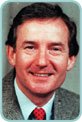
Barry Sheerman MP, Chairman of the Education Select Committee
Barry Sheerman MP
Question: An alliance of unions are campaigning for a reduction in the workload of teachers. What is your view of their concerns over workload?
Barry Sheerman: I think they have genuine concerns, I don't underrate them at all, and indeed, in our report on our meeting with the new Chief Inspector of Schools, we pay some attention to that and indeed we take very seriously Mike Tomlinson's comments that his great fear was that the problems of recruitment and retention could undermine all the good work that the government has done in the last few years. So yes, it is very serious and we have got to get through this difficult period.
But there is a side of me that says we have been here before in the early '90s. We all know that we had dreadful teacher shortages. Many say the figures show they were much worse than the ones now. When you are up at the top side of an economic cycle there is obviously greater competition for graduates. I have quite a lot to do with the information technology world, and recruiting good quality people at the moment is a nightmare.
Question: Members of the moderate ATL voted to demand a 35 hour week and a minimum salary, and they are going to go for a work to rule. A moderate union, is this a worry for you?
Barry Sheerman: I actually don't like the Easter conference season. But whenever it comes, we see unions outbidding each other, all competing to show that they care for their members more than the other unions. And now, even ATL which has got a more moderate reputation is at it. They are more and more strident in their demands for their members.
Question: Do you think it would be better to spread the conferences around a bit, and not have this collection at Easter?
Barry Sheerman: Yes it is a pity that they are all at Easter. They are all competing on the same turf and I think that they say things and behave in ways in the conferences that very often put people off, including those who are thinking about going into teaching, or teachers themselves. Certainly many of the people I have talked to about this feel that they estrange teachers in a worrying way from the main body both of the British population and the average teacher. I think the Easter conferences are one of the biggest turn offs for those considering the profession, more than almost anything I can think of.
Question: In recent interviews, both Nigel de Gruchy and Doug McAvoy said that teachers are overworked. David Puttnam has said he thinks that 90 per cent of teachers are overworked. What do you think?
Barry Sheerman: Teachers are overworked, heads are overworked. Being a head teacher is the most complex management task that one could imagine. This came out very strongly in our select committee enquiry into Headship.
Question: Is there too much paperwork?
Barry Sheerman: We have got to get this in balance. People will always complain that there is too much paperwork, but it is much more complex than that. I think that the problem in the case of teachers is they don't get the back up they need to free them to do their core job.
There are not enough backroom people actually helping with the preparation of lessons and such like. A well run school should have adequate resources to give the help that teachers should be entitled to expect. And teachers should, ideally, have one entirely teaching free day every week.
The thing about bureaucracy and form filling and red tape is that it often acts as a kind of lightning rod for a much more complex set of issues that are affecting teachers. I was sitting there in the Special Education Needs debate the other evening, discussing a Bill which has almost uniform support from all parties, and I was sitting there thinking to myself, yes, what an important piece of legislation this is, but what an enormous lot of hard work it is going to be for teachers and heads. So you get one thing in the one hand and everybody wants it, but that will deliver a hell of a responsibility on teachers and heads in the near future. And then people will say, it is all red tape.
Question: You were touching on something earlier about assistance for teachers. Would you like to see more teachers assistants, who could perhaps prepare the coursework and lesson plans?
Barry Sheerman: I think teachers would be much better served if they had a very highly sophisticated resource back up which would take some of the necessary, but mundane jobs away from them. I think all professionals need to have the very best back up you can give them. And that is what teachers deserve. And it is in everyone's best interests as it would give teachers more time to actually concentrate on teaching.
Question: How receptive is the government to this idea, do you think?
Barry Sheerman: I think they are receptive, but you know, isn't it interesting that teachers tend to anyway, get more active and vocal at their conferences when they have got a government who is actually doing things for them. I think we have seen some really significant changes for the good, in terms of investment in education. £7 billion has been put into the pre-school sector alone and across the board we have seen much greater expenditure on education. All this is very good, but funnily enough, it is actually the very time when teachers start saying but we want more. It is a classic - just when things are really improving we get more and more strident demands.
Question: Why do you think there are teachers shortages though?
Barry Sheerman: There are teacher shortages for the very reason that there are shortages in every other skilled occupation. Many of the skilled professions are in great demand and there is a growing shortage in people with IT skills to fill jobs right across Europe. That is the truth of what happens in a real economy. Obviously the shortages are more pronounced in the public sector because it can't compete with the private sector in terms of salaries at the moment. The situation is much more competitive now. And another thing, which I keep harping on about, is the fact that traditionally women have been a great source of recruits to the teaching profession because they were convinced in many cases that it was the only profession open to them. Seriously. Women are now much more aware that they can now do any job they like so you are suddenly seeing this enormous competition for a source of recruits that used to be pretty safe for teaching.
Question: The government has made head-way with teacher- pupil numbers for 5,6 and 7 year olds. But the pupil-teacher ratio in secondary schools remains higher than at any time since 1975?
Barry Sheerman: I have seen those figures and don't accept them. I think that has been a gloss put on by Theresa May and others. With the figures that the Select Committee have looked at you actually see quite an improvement from 7-11. If you take the last four years compared with the four years previously. So I think you have to look at those very carefully. But there is no doubt there is a fair way to go. In my local constituency, I have been to two schools, where they have got classes of ten and eleven year olds with 41 and 39 pupils in a class. That is too many and we will have our work cut out getting those numbers down. But you have got to assert priorities, and as all the research shows that it is most important to have smaller numbers with the younger ages, then that is where you start tackling it. You have to make priorities, and the next priority will be bringing down class sizes in the 7-11 age group. And of course the other priority is going to be putting real resources into and tackling the problem, particularly with boys, of pupils between eleven and fourteen being turned off education.
Question: Why is that do you think?
Barry Sheerman: I don't know. In the interview with Mike Tomlinson, we very strongly pursued this. There have been very good signs of improvement across the board for boys and girls in terms of literacy and numeracy, but boys are lagging behind in writing skills. There is some evidence coming through that it is to do with the pressure of lifestyle. Little boys, quite early on, being persuaded that it is not cool to be a swot, it is not cool to study and they should be out doing other things. There is a lot of pressure, and I know that this has been said particularly about afro-Caribbean kids, but I think the problem is much more widespread and it is something that is worrying for males. This is something we recognised when we went to the United States and looked at access to higher education, was that the real big problem was getting white students from working class homes into higher education. That is something that is also a great problem here.
Question: It is a cultural problem, is it something really that the government can deal with, or is it something really more that parents should try and work on?
Barry Sheerman: I think all these things depend upon partnership. And in our early years report we emphasised the need to put the parent at the centre of the partnership between school, pupil and home.
Question: Would you like to see more parent involvement in the education system?
Barry Sheerman: Yes, but not only on a symbolic level. When the previous government introduced the annual meeting, people do not want to be involved in a kind of ritualistic way. They want to be seriously involved and consulted, not only on their own children's education, but also in how the school is managed. What the problems are. Proper involvement is, I think, the way ahead. Turning up into a cold school hall once a year on a winters night, puts more parents off than includes them as a stakeholder.
Question: So what type of involvement would you like them to have?
Barry Sheerman: Well, I think apart from involvement at home, there should be more contact in terms of talking to teachers and even being involved with teaching, as well as, perhaps, a range of leadership and day to day tasks. It may also be that parents could provide some of those support services, that we talked about earlier in the interview.
Question: Union leaders say that morale in the teaching profession is at its lowest point. Do you agree with that?
Barry Sheerman: I think that is pure trade union hyperbole, the sort of thing you always get from Nigel de Gruchy and Doug McAvoy. I get sick and tired of it. It becomes less persuasive in the repetition. It is a disservice to teachers and to the profession. On the one side you have got a government trying to push status, esteem and respect accorded to teachers up, with people like David Puttnam actively involved as Chairman of the General Teaching Council, and on the other the unions trying to convince teachers that they are miserable. This is what makes people despair about teachers, and what has reduced the professional esteem of teachers. Many people I talk to say that teachers have never recovered the esteem that parents had for them, and the public had for them since the last time they took industrial action. Because they immediately make themselves look like people who don't have the real care of their pupils as their very first priority. If there was a Hippocratic oath for teachers, I would have thought that the Hippocratic oath would have said you never let your pupils down, you always educate them, you never walk away from them, and from your duty to educate.
Barry Sheerman: Well I think they should still be driving up standards at all costs. A child that cannot read and write, a child that cannot use the Internet, cannot use ITC skills is a seriously disadvantaged child. It will always hold them back. Already you are seeing in our comment on the Tomlinson interview our recommendation that there will be a national strategy for ITC learning. It is something the government should be taking much more of a lead role on. The best thing about this government is that it is pragmatic. It asks what the problems are, and can we find the answers? It is willing to try a number of different solutions and what survives is what works. Some of them will work, some of them won't work. And that is the nature of being pragmatic. If you look at 11-14, yes, all the statistics show, that is where many children lose their interest and energy for education, so 11-14 has got to be a big challenge. But on the other hand we have got to be very careful. Teaching for tests is not the kind of education we want and so getting that happy balance is very important.
Question: There is a lot of talk that David Blunkett may be leaving the Department for Education after the election. How would you assess his term in office?
Barry Sheerman: I think he has been excellent. First of all, he has tremendous personal commitment - he has stayed there. If you walk along the corridors of the Department for Education and Employment and you see the photographs of the previous education ministers and their tenure of office, some of them are there just ten months, some of them for two years. Apart from Keith Joseph, no-one has stayed the term and that has been bad for education. It has been brilliant that David has been there as a guiding hand for four years. That has been an enormous boost. And also his energy, enthusiasm and dedication I think are not to be doubted. I have been very impressed. I think he will go down in history as the best Secretary of State that we have had.
Because of his own background, and because his children have gone to state schools, he actually understands what most ordinary people who send their children to state schools experience and what problems they face. And he has gone out to tackle those. He got us out of this ghastly old ideological argy bargy about grammar schools and selection against comprehensive education and non-selection. That vocabulary of the 60s is something that people like Roy Hattersley would love to drag us back in to and David has set his face against it and said lets take the ideology out of education and lets concentrate on just finding the answers so that every child in this country gets a fair crack at education.
|