NOAH represents the companies that research, develop, manufacture and market animal medicines in the UK. In 2001 NOAH's members represented well over 90% of sales in the £389m animal medicine market (at ex-manufacturers prices).
This compares with the UK market for human medicines, which for 2002 was £6.9bn, according to figures from IMS Health.
Sales Survey of Animal Health Products 2002
(£sterling at ex-manufacturers' prices)
|
Jan-March |
April-June |
July-Sept |
Oct-Dec |
Total 2002 |
Total 2001 |
| Feed Additives |
5 192 812 |
6 026 049 |
6 005 350 |
6 436 870 |
23 661 081 |
21 953 275 |
| Pharmaceuticals |
53 439 687 |
62 888 486 |
68 878 192 |
63 900 922 |
249 107 287 |
237 373 279 |
| Vaccines |
18 261 506 |
19 480 213 |
23 783 572 |
24 506 018 |
86 031 309 |
82 007 634 |
|
|
|
|
|
|
|
| Total (survey figure) |
76 894 005 |
88 394 748 |
98 667 114 |
94 843 810 |
358 799 677 |
341 334 188 |
|
|
|
|
|
|
|
| Total(with extrapolation for non-participating companies) |
84 327 005 |
96 322 748 |
107 188 114 |
101 463 810 |
389 301 677 |
358 877 188 |

It is still a market with many products with small turnover, although numbers of licensed animal medicines available are declining.
The UK Market for Animal Medicines
Products by Sales Value 30th June 2000 MAT
| Sales Value £ |
Number of Live Products
|
| 2000 |
1995 |
| 0-25K |
401 |
419 |
| 25K-50K |
162 |
174 |
| 50K-75K |
94 |
123 |
| 75K-100K |
77 |
78 |
| 100K-250K |
220 |
238 |
| 250K-500K |
96 |
114 |
| 500K-1000K |
79 |
74 |
| 1M-5M |
79 |
56 |
| Over 5M |
6 |
2 |
|
1214 |
1278 |
What types of medicines are there?
Products can be loosely categorised into three main sections
(a) Preventative medicines
Licensed to stop healthy animals from getting sick or infested with parasites, these include:
- Endoparasiticides, prevent and treat infestations by parasites that invade the body, such as worms, flukes or coccidial protozoa
- Ectoparasiticides - prevent and treat infestation by parasites that live on the outside of the animal, for example mites, ticks, fleas, flies
- Endectocides - prevent and treat infestation of both types of parasite
- Vaccines - prevent diseases caused by certain viral or bacterial infections
- Antiseptics - prevent bacterial contamination
(b) Therapeutic Medicines
These cure sick animals and include:
- Antibiotics - treat bacterial infection
- Hormones - treat reproductive problems
- Anti-inflammatories (pain killers)
- Others (including cardiovascular medicines, and medicines for digestive disorders)
(c) Others
These are medicines to help the veterinarian or the farmer:
- Digestive enhancers - a very small group of specially approved antibiotics to help farm animals get the maximum benefit from their feed
- Anaesthetics (includes analgesics and euthanasia products)
- Dietary supplements - these are medicines to treat or prevent specific dietary deficiencies, rather than nutritional supplements.
The UK market for animal medicines
Sales by product type (£m at ex-manufacturers prices)
| Type of Product |
2002 |
2001 |
| Preventive |
| Endoparasiticides |
43.9 |
49.0 |
Ectoparasiticides
farm
pet |
14.4
44.3 |
11.9
42.2 |
| Endectocides |
15.6 |
14.6 |
Vaccines
farm
pet |
42.7
43.3 |
41.2
40.8 |
| Antiseptics |
1.0 |
2.0 |
| Total Preventative |
213.8 |
201.7 |
| Therapeutic |
| Antimicrobial |
71.4 |
67.0 |
| Hormones (including breeding management) |
8.8 |
7.5 |
| Anti-inflammatories |
24.8 |
21.8 |
| Others (includes cardiovascular preparations) |
15.8 |
14.5 |
| Total Therapeutic |
120.8 |
110.8 |
| Others |
| Dietary enhancers |
3.0 |
3.4 |
| Anaesthetics |
15.9 |
20.1 |
| Dietary supplements/fluid replacements etc |
5.1 |
5.2 |
| Total Others |
24.0 |
28.7 |
| Total (Survey figure) |
358.9 |
341.3 |
What are the trends in animal medicine use?
In 1986, when NOAH was formed, around 70% of animal medicines were used in farm livestock. Now over half animal medicine sales, by value, are for companion animal use, and this area continues to grow.
This swing towards companion animal medicine is in part due to the depressed state of UK livestock production, with farmers having less money to invest in their livestock, and there being fewer livestock for them to invest in.
But it is also due to exciting new product developments in the companion animal sector - Britain's pets have every opportunity to live long and healthy lives.
*Many products are licensed to be used in different species, and some for both food producing animals and pets. Manufacturers do not always know exactly where they will be used. If greater than 90% of sales fall within one of the three summary categories, products are allocated to that category. If less than 90%, they are allocated to the 'multi' category in the survey.
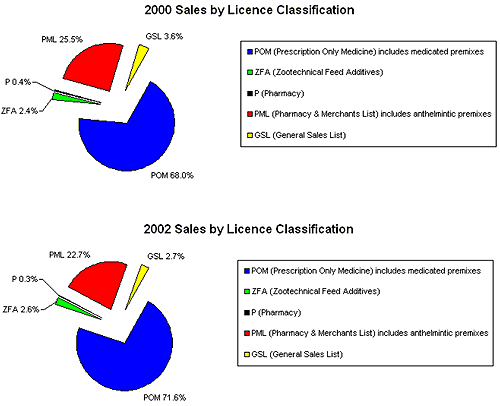
Sales by classification
Medicines are classified according to how they may be sold:-
| POM |
Prescription Only Medicine |
| P |
Pharmacy medicines |
| PML |
Pharmacy and Merchants List - a medicine which can be sold through registered merchants premises |
| GSL |
General Sales List |
| MFS |
A medicated pre-mix which requires vet's prescription |
| MFSX |
A medicated pre-mix which does not require vet's prescription |
There is also an unofficial term ZFA for zootechnical feed additives.
|


