|
Scientists must take on Beckham, says minister
Scientists and engineers must compete with David Beckham for the attention of youngsters, a senior minister has said.
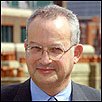
In an exclusive interview with ePolitix.com, science minister Lord Sainsbury said the two fields must find communicators that can interest children and teenagers whose main interests are football and England captain David Beckham.
He accepted that both government and leaders in science and engineering were not doing enough.
"I think there is a real issue here. Particularly in the engineering field where there are hugely exciting things happening," he said.
"Nanotechnology, global positioning systems, satellite communications, bioengineering and mobile phones. We're not communicating to young people that this is engineering and incredibly exciting."
He pointed to the Mars lander project as one example of how engineering projects can generate publicity that could interest youngsters in studying the subject.
"I think young people understand that biology and IT are exciting subjects but, you know, this is engineering and it's wonderfully interesting. We've got to convey that," he said.
Lord Sainsbury also accepted it was ironic that Beckham promotes mobile phones but no-one promotes the technology that creates them.
"There's a problem here which is to some extent that if people think it's exciting people say 'well it's not engineering'. But that's what communicating has to be about," he said.
"We do things well in so many areas; aerospace, we build most of the Formula 1 cars. It's because we are very clever at this kind of inventive engineering."
With mounting speculation over the future of British space research missions to Mars, Lord Sainsbury hinted that government money will fund space exploration because it is too high risk for business and doesn't guarantee a return.
"Space exploration is something that requires government money because there may be spin-offs - as there may be with a mass spectrometer - but that isn't sufficient to make any commercial company come into this," he said.
"At this stage the commercial possibilities are rather remote. There are huge commercial opportunities in space but its not about exploration; global positioning, telecommunications satellites and environmental monitoring."
He also gave an upbeat assessment of the Beagle 2 Mars Lander, arguing it was a risk that had been worth taking.
"I think you have to start from the fact that space exploration is always a high risk activity and this is certainly high risk. But I think a huge amount has gone into the testing of the lander and there's been some clever engineering," he said.
"But you must always realise you don't do good science, you don't do great engineering without taking some risks. You must accept there are risks on this and that's what drives the innovation and the creativity. You don't get it by taking lots of soft options."
He described the project as "very influential" and predicted it would change how scientific space exploration will take place in the future.
"I think for the next couple of decades the obvious route is through robotic exploration rather than manned exploration," he said.
"If you start manned exploration there are real problems but also huge costs involved. When you see the clever technology being deployed here, you don't add much to that, if anything by having manned exploration. So I think this could be quite influential."
|