|
Reid takes on critics of NHS reform but loses key vote
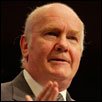 |
| John Reid |
Health secretary John Reid has tried and failed to avoid a grassroots defeat over plans to establish foundation hospitals.
Inflicting the first defeat on Tony Blair at this year's annual gathering, activists dismissed Reid's plea not to lose sight of the government's wider health agenda.
The issue will now be referred back to Labour's National Policy Forum for further discussion.
However while delegates will be pleased to see they retain some power in principle, the prime minister had already made clear the vote will have minimal effect on government policy.
Following the vote a senior minister said that the conference's decision "does not mandate the government".
The rebellion came after the health secretary said that self-governing foundation hospitals would provide faster and more efficient treatment for patients.
In a speech which failed to mention the words "foundation hospitals", Reid said a failure to reform the structures of NHS would be an abdication of Labour's responsibilities.
"If we choose the other way...it will not just be Labour which will lose affection and support," he said. "It will be the National Health Service itself. That would be the real betrayal."
Departing from his pre-prepared speech, Reid insisted that poorer people should be able make the same choices over their healthcare that have previously been available only to the rich.
"It is the wishes and needs of the vast majority of today's working people which should take precedence and the old structures and systems which must be reformed," Reid argued.
"Having increased the resources as never before, having increased the capacity of the NHS faster than any time in history, we are now engaged in the greatest peacetime programme of improving the NHS so that we can treat more patients more quickly," he added.
"The government's aim was to provide the public with "a degree of choice in where and when to have your operation and more say over your treatment".
Earlier union leaders had pushed for the resolution opposing key parts of the government's plans to reform the National Health Service.
Foundation hospitals would be a "self-inflicted wound" to the government's efforts to renew the NHS, outgoing TGWU general secretary Sir Bill Morris cautioned.
"To this day, the NHS remains the cornerstone of the 1945 legacy...and foundation hospitals would be a self-inflicted wound and a gift to future Tory government to destroy the National Health Service," he said.
They would see the creation of "a two-tier health service built on co-payment and private insurance".
"For the first time, Labour seeks to legislate for inequality. Excellence for a few, misery for the many," Morris warned.
"This movement did not march, then get the extra resources for the National Health Service...only to hand it over to the private sector."
And health union chief Dave Prentis said the reforms had been forced on party members with "no consultation".
The plan for a "two tier NHS" had little support within Labour or the general public, the Unison leader argued.
|


