|
Duncan Smith unveils 'compassionate Conservatism'
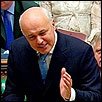
Iain Duncan Smith has pledged to develop a distinct brand of "compassionate Conservatism".
The Tory leader made a plea for his party to understand the needs of poor communities despite recognising that the strategy might bring few electoral gains.
"I don't expect to storm the Labour heartlands at the next election," Duncan Smith said.
"But unless Conservatives can show that we will govern for the whole nation, we will neither win nor deserve to."
The opposition leader challenged Labour's traditional image as the party that cares for the underprivileged.
"Labour think they have a monopoly on compassion," he said. "And this monopoly - like all monopolies - has hurt the people it dominates.
"Poverty is too important an issue to leave to Labour. It's too important to leave to any one political party."
Although he conceded that ministers were well intentioned in their bid to eradicate child poverty, Duncan Smith added that the government's approach was misguided."Britain's left-behind communities are often thought of as Labour's strongholds, their heartlands," he said.
"But there's little heart in the way Labour neglects and forgets these communities.
"The burdens of want and fear are blighting the lives of more and more people in this country, casting a shadow over the lives of the many and dominating the lives of the few.
"I believe many Labour politicians genuinely care about poverty but, sadly, something has gone terribly wrong with their policies."
He argued that the chancellor had encouraged dependence on the state through his use of means tested benefits, rather than an escape route from poverty.
"Labour's policies have left the poor even more dependent on the state for their incomes and the kind of public services they receive," Duncan Smith said.
"Worse still, Gordon Brown has spread dependency up the income scale.
"And when times get harder, as they always do, that dependency will remain. But it will be harder for a weaker economy to afford.
"And that, in the end, will be Labour's legacy to the poor - dependence not independence."
Drawing on his high profile visit to Glasgow's Easterhouse estate, Duncan Smith said the experience had "had a profound impact upon me".
"I think of children growing up in homes where it's still hard to make ends meet," he said.
"I think of pensioners in communities ruled by criminal gangs."
"They have led me to refocus the Conservative Party on the challenges that most face these communities but which worry and threaten everyone."
The result had been a raft of policies aimed at tackling the problem, he claimed.
"In recent months Conservatives have announced policies on schools, policing, drug rehab and social entrepreneurship that will help people who find life a daily struggle," Duncan Smith said.
"People whose struggle is greater because of this Labour government. Greater because of the humiliating complexity of Labour's benefits system.
"Because of the taxes Labour have loaded onto the backs of the poorest workers. Because of Labour's appeasement in the war on crime and drugs."
Speaking at the same conference on Monday, the Conservative spokesman on international development said the Tories' "compassionate" message on aid was in tune with Duncan Smith's thinking.
"It is simply wrong and unfounded that other parties portray the Conservatives as less caring about international development," Caroline Spelman said.
"The clear blue water between the Conservatives and Labour is how you make aid more effective.
"What blunts its impact is when blank cheques are written for governments with poor records.
Aid should not be given on "promise of improvement but on evidence of reform" she added.
"Conservatives believe that aid should be provided in badly governed countries via third parties such as NGOs, churches and the private sector," Spelman said.
"There is no need to penalise the vulnerable just because they are poorly governed"
|