|
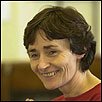
Morris returns as arts minister
Estelle Morris has returned to government as minister for the arts less than a year after quitting as education secretary.
When she resigned last autumn, Downing Street made clear that the prime minister retained full confidence in her.
Earlier this year she signalled that she would be prepared to return to government.
"If someone made me an offer I would want to reflect and discuss it with them," she said.
But it was her unusual resignation which won Morris the respect of many of her colleagues.
In what many saw as an honest and frank resignation letter, Morris admitted to difficulties in managing a large Whitehall department.
"I've learned what I'm good at and also what I'm less good at," her letter said.
"I'm good at dealing with the issues and in communicating to the teaching profession. I am less good at strategic management of a huge department and I am not good at dealing with the modern media."
But while Morris may feel less than confident in handling the media, her predecessor as arts minister, Kim Howells, also proved capable of generating critical headlines.
He was seen as gaffe-prone, criticising Turner prize nominations as "conceptual bullshit" and describing listening to Somerset folk music as his "idea of hell".
Resigning last October, Morris said there was no single problem which prompted her move.
But she pointed to a series of tough issues which had apparently left her doubting her own abilities.
She had initially proven a successful education secretary, winning a six per cent annual increase in education spending in Gordon Brown's spending review.
But the first wave of criticism came when her demand for strict vetting of teaching staff caused chaos in schools across the country.
Morris described herself as a "very dissatisfied customer" of the Criminal Records Bureau, and was left apologising as thousands of children were sent home at the start of term.
It was the A Levels fiasco, however, which led to the real crisis in self-confidence.
Morris sacked the chairman of the Qualification and Curriculum Authority, Sir William Stubbs, after the two became engaged in a public war of words.
However, she had won praise from head teachers for appointing Mike Tomlinson to conduct an independent review of the behaviour of the examination boards.
And Tomlinson cleared ministers of any involvement in putting pressure on the QCA to "fix" the outcomes of the A Level exams.
But despite that, Tomlinson's later conclusion that just 168 students had unfairly missed university places prompted criticism that Morris had over-reacted to the crisis.
Morris was also accused of exceeding her powers last autumn when she intervened in the case of two pupils excluded from their school for making death threats against a teacher.
The case centred on Glyn Technology School in Surrey and had seen the pupils reinstated at the school by an appeal board.
Amid reports that she was "furious" about the case, Morris asked the local education authority to have the boys taught in alternative school.
One local councillor, Kay Hammond, said at the time: "The intervention by Estelle Morris is not helpful because we were trying as a matter of urgency to find a way forward in a very difficult situation."
There were also revelations that the government had failed to hit key education targets.
Conservatives accused her of misleading parliament over a pledge on literacy and numeracy standards.
The row centred on an education debate on March 2, 1999 in which Morris, then schools minister, was asked by David Willetts if she would "commit herself" to a pledge by the then education secretary David Blunkett to resign if key targets were not reached by 2002.
"Of course I will; I have already done so. Indeed, I generously commit the under-secretary, my honourable friend the member for Norwich South [Charles Clarke], too. We speak with one voice," responded Morris.
"The honourable gentleman's question is a reflection of what life was like under teams of Conservative ministers, when a secretary of state would promise to resign but the rest of the team would not go too."
However, in a subsequent appearance before the Commons education select committee, she said she would not resign if the targets were missed and added that "I never said I would".
|