|
Euro vote 'still possible before next election'
British membership of the single currency will not be ruled out before the next general election, it has been reported.
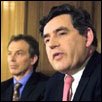
Ahead of Gordon Brown's June 9 statement to the Commons, Sunday's newspapers contained further speculation over the outcome of the Cabinet consultations.
The Sunday Telegraph said that Tony Blair could delay the next election in a bid to hold a referendum on euro membership, possibly in 2005.
In return for keeping the option open, the chancellor could maintain control over the five key economic tests.
"Everyone has been assuming that the next election will come in the spring of 2005 but Tony could put that back to the autumn of 2005 or wait until 2006," one Cabinet minister told the paper.
"The key thing that has emerged from the consultation with the Cabinet last week is that it has unlocked a clear consensus in favour of keeping open the option of a referendum before the election."
Meanwhile, the Observer reported that the official Treasury analysis of Britain's readiness for entry into the single currency has found that the UK is more convergent with the European average than some existing eurozone states.
Speaking on Sunday, Welsh secretary Peter Hain said the Cabinet was united in not wanting to rule out euro membership for the "foreseeable future".
"I was in a meeting with the chancellor and the prime minister last week to discuss my views on how we should move forward. It was very amicable," he told the BBC.
"I think...we are all agreed that what we must never do is rule out joining the euro in the foreseeable future.
"That would be disastrous for Britain. That is the Conservative policy which would consign Britain to a role of being isolated from Europe."
But with the Cabinet expected to conclude that Britain is not ready for immediate membership of the single currency, pro-euro campaigners have been expressing their frustration.
Outgoing TUC chief John Monks said it was time for "bold leadership" from the prime minister.
And he told GMTV that the chancellor wanted "an odds-on calculation before he embarks on the referendum and an odds-on calculation that there'll be an immediate financial, economic benefit to Britain".
"I don't think he's going to get that and this is therefore one of those opportunities politicians have to be bold, take some leaps without a sure-fire conclusion in mind."
|