|
BNP targets South West seats
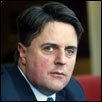 |
| BNP leader Nick Griffin |
Riding on the back of successes in the north of England, the British National Party are fielding a wave of candidates in the South West in next week's local elections.
But the strategy marks a departure for the far right group as they seek to exploit disaffected Conservative supporters rather than disillusioned Labour voters.
The nationalist party has put forward 17 contenders for council seats in the region as part of a concerted attempt to set up a power base in the south to match their strongholds in northern towns such as Oldham and Burnley.
In response a coalition of "anti-fascist" pressure groups have come together to oppose their march on the area and deny the BNP their first foothold in power.
BNP leader Nick Griffin said last year that he wanted to make South West England a "multicultural-free zone".
The area has far less ethnic diversity than others the BNP has targeted, such as Blackburn and Halifax, where they have successfully exploited a combination of low turnout and racial tensions to gain council seats.
In several seats, such as Taunton and Torbay, the party are hoping to tap in to fears of an influx of asylum seekers among the mainly white populations.
They are also opposing plans to build a Mosque in the Somerset town of Yeovil for the small Muslim population there.
In multi-ethnic Bristol, where they are standing in four wards of the city council, the group are sticking to their more usual strategy of promising to direct more resources on issues such as housing to white voters.
Campaigners believe that the BNP is targeting wards with low turnouts where only a few votes are needed to get a council seat.
Former Conservative supporter Peter Mullins is standing for the BNP in the Cornwall seat of Altarnun.
He recently told his local newspaper that: "At the moment Altarnun is beautiful and untouched. I wish to help preserve Altarnun and the rest of our British way of life. We don't want the angst and stress here that we have in our cities."
Torbay candidate Tony North blamed high council taxes on "ethnic minority children and asylum seekers".
Griffin's attempts to modernise his party's image have paid dividends in recent years.
With increased respectability he managed to take a 17 per cent share of the vote in Oldham at the 2001 general election.
This was followed up by victory in council seats in Halifax, Burnley and Blackburn.
This year the party is extending its reach with a record 221 candidates standing across the country.
Two more northern cities will be particularly targeted, with every seat in Sunderland being contested and several more in impoverished Stoke-on-Trent.
Residents of the Potteries town have protested against the dispersal of asylum seekers to the area and the BNP moved quickly to tap into the campaign.
The main political parties have shied away from confronting the BNP through fear of attracting attention to them.
However Yeovil Liberal Democrat MP David Laws is anxious that his constituents are not seen as intolerant.
Of the proposed Mosque in his constituency he said: "I think there is a small minority of people who have responded in a somewhat hysterical way to this."
And Labour's Sunderland MP Chris Mullin said that the BNP were "circulating some very nasty newsletters which appeal to the lowest common denominator".
"The fabrications are frightening, they are bad for the image of Sunderland and I fear that unless people turn out and vote for the traditional parties, then sooner or later we will get a BNP councillor here," he said.
In the South West a number of trade unions and other bodies including the Anti Nazi League, the National Civil Rights Movement and Labour and Lib Dem branches have come together to form the "Unite to Stop the BNP" campaign.
|


