|
Global uncertainty prompts new EU budget fears
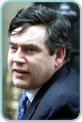
Gordon Brown has joined his EU counterparts for talks on the potential economic impact of a Gulf war.
Ahead of the meeting of finance ministers, a Brussels spokesman revealed that the economic fall out of military strikes is "one of the most delicate issues" on the agenda.
"We expect ministers to discuss issues linked to the geopolitical uncertainties," said the Commission's economic and monetary affairs spokesman.
Speaking on Monday, the president of the European Central Bank, Wim Duisenburg, warned MEPs that the prospect of war was increasing "downside risks" for the eurozone economy.
"Uncertainty regarding the economic outlook remains high, in particular due to the ongoing geopolitical tensions," he said.
"Further turbulence in the oil markets could have a negative impact on economic activity throughout the world and, therefore, on euro area employment as well. These concerns could weigh adversely on confidence."
On the political as well as financial front, the European Commission is concerned that international uncertainty may knock EU stability and growth rules off track.
Germany is struggling to comply with tough EU demands for a three per cent of GDP deficit limit.
And according to press reports the Berlin authorities may seek a review of European "stability and growth" guidelines in the light of rising unemployment and a possible slowdown following a Gulf war.
The Commission president, Romano Prodi, has already warned of "a prevailing sense of insecurity".
"Of course, this phase of the economic cycle is not helping us and nor is the current international political situation.
"On top of the endogenous causes of Europe's economic slowdown are the uncertainties and fears associated with the risk of a conflict and the difficulty of assessing its timing and consequences," he said last week.
The economic and monetary affairs commissioner, Pedro Solbes, has conceded that guidelines can change in "exceptional circumstances". "If a war is not an exceptional circumstance, I wonder what is," he said last week.
Against this background of world economic and political uncertainty, the UK chancellor must answer concerns that his public spending plans may send Britain too far into the red.
The commission will tell Gordon Brown that "the rise in [his] cyclically adjusted budget deficit is due, to a large degree, to the welcome reversal of the historic decline of net public investment relative to GDP".
But while UK public finances are overall judged to be in a "sound position", Brown will be cautioned that he may be sailing close to the wind given the prevailing uncertainty.
"The three per cent of GDP threshold has to remain 'untouchable'. In the commission's view, an underlying deficit of around 1.5 per cent of GDP coupled with a nominal deficit of 2.2 per cent in 2003/04 may in adverse cyclical circumstances cause the nominal deficit to approach this threshold," states an Ecofin briefing document on the British economy.
|