|
Lords reform 'in disarray'
A series of options to reform or abolish the House of Lords have been rejected by MPs.
The decisions mean that the Commons has failed to reach a clear position on how to proceed with reforming the upper house.
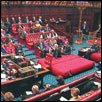
But in the Lords, peers came down decisively in favour of a 100 per cent appointed chamber - the prime minister's favoured option.
Responding to the votes, which followed his high profile call for MPs to vote flexibly in favour of a largely elected upper house, Robin Cook said that it would be wise to "go home and sleep on this".
The next steps would have to be considered by a joint committee of both houses, said the Commons leader. "Heaven help them because they will need it."
For the Conservatives, Eric Forth said the position was now "interesting".
"The commitments made in the government's manifesto look as if they are now in shreds," he said.
And the Tory leader in the Lords, Lord Strathclyde, slammed the government's handling of the reform proposals.
"After today's votes, the government's plans for Lords reform are in disarray. The strategy of making policy up as they go along has backfired," he said.
The SNP's chief whip, Pete Wishart, also said the votes had left government policy "in chaos".
"Robin Cook told MPs to go home and sleep on the issue, but I'm sure he'll be having nightmares tonight," he added.
The voting saw MPs reject the positions set out by both Robin Cook and Tony Blair.
But "hybrid" options that saw appointed members take a majority in the upper house were more soundly defeated than those that envisaged a greater proportion of elected members.
A fully appointed upper house was rejected by 323 votes to 245.
The option of a fully elected Lords was opposed by 289 votes to 272 - a margin of just 17.
The vote on an 80 per cent elected chamber was even closer - being ruled out by 284 votes to 281.
Earlier, 172 MPs voted in favour of abolishing the upper house altogether - but the move was defeated by a majority of 218.
During voting in the Lords, peers backed an entirely appointed chamber by a margin of two to one.
The House of Lords voted for a fully appointed chamber by 335 votes to 110, a majority of 225.
Plans for a fully elected upper chamber were defeated by a similar 329 to 106.
The "hybrid" options for combining appointed and elected members in a reformed upper house were soundly defeated in a series of votes.
Earlier, opening the second day of debate in the Commons, Robin Cook had urged MPs to be "bold".
He said it was "crucial" for MPs to express a clear view.
Cook rejected suggestions that the government was split on the issue.
He said the media should welcome the free vote on the seven options for reform, plus a further division on the abolition of the Lords.
"We should celebrate that a free vote is allowing us to express different views, rather than deplore it," he told MPs.
Intervening in the debate, former minister Peter Mandelson warned that an elected chamber using a separate method of election would be "untenable".
He said the "inevitable logic" of introducing democracy into the upper house would be a single, proportional, electoral system for all UK elections.
Cook said MPs "should not be seduced" by such arguments and expressed confidence that the public could cope with multiple electoral systems.
The Commons leader said he would be voting for a 100 per cent, 80 per cent and 60 per cent elected upper house.
"What is important is not the precise percentage," he said. "What is important is the principle that the majority in any parliamentary chamber should be elected by the people for whom they legislate."
The shadow leader of the Commons, Eric Forth, pointed to the "unprecedented public auction for support between the leader of the house and the prime minister".
"It remains to be seen who wins that auction. I wouldn't like to guess because I think the whole matter is deliciously uncertain at this stage," he said.
Both Cook and Forth backed the proposition that a reformed House of Lords should be substantially smaller than the 659 members of the Commons.
Former education secretary Estelle Morris warned that the debate on reform should not become "insular", ignoring the wider impact that reform could have on the perceptions of the public.
She said it was possible to mount a defence of the current Lords, but said that it lacked relevance to the lives of ordinary people.
Morris said reform "has to ring true with people out there" and called for a compromise that would see a largely elected upper chamber denied the authority to challenge the supremacy of the Commons.
"We will be judged at the end of this debate by how well we have restored democracy and parliament in the eyes of the public," she said.
|