|
Zimbabwe cricket talks due next week
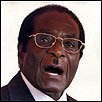 |
| Discredited Zimbabwe president Robert Mugabe |
England are not out of their controversial cricket match in Zimbabwe yet but government talks will seek end the impasse.
England and Wales Cricket Board chairman Tim Lamb will meet with culture secretary Tessa Jowell and foreign office minister Baroness Amos next week.
But his call for compensation for lost income or fines imposed through not playing the game is unlikely to be met after ministers all but ruled the idea out.
Foreign office minister Mike O'Brien told Radio 4's Today programme that "effectively our view is that we would not compensate on this".
He said government ministers and the prime minister had expressed views on the match, but the decision to cancel had to be left with the cricket authorities.
"We will talk to them, but I would need an awful lot of convincing before there would be any form of compensation," he said.
Lamb said that we wanted to, "make sure that we'll be fully indemnified for going along with the government's wishes" of not sending the team.
He said the board would discuss the "potential financial and contractual ramifications" of not playing at the meeting next week.
The government offered talks to resolve the dispute on sending the team to Harare for the match against South Africa on February 13.
Deputy prime minister John Prescott had paved the way to talks by saying that the government's "door was open" for direct discussions on the issue on Monday.
Speaking on BBC radio Prescott said that "if (Tim Lamb) wants to continue discussions, even at a direct level, the door is open to him".
Reluctance to take responsibility
Neither side has wanted to claim responsibility for the decision on whether to allow the England team to play in the troubled African nation.
The government has said it would be wrong to go because of the "dire" political and social circumstances in the country led by discredited president Robert Mugabe.
But the Foreign Office has refused to order the team not to travel to Zimbabwe, insisting that the decision must remain in the hands of the cricket authorities.
The ECB has said it is a political decision that must be made by politicians.
Lamb said it was not for sporting bodies to make moral or political judgements.
Hardened stance
Having treaded carefully in recent weeks on the issue the government hardened its stance over the weekend.
O'Brien put on the record his opposition to England's participation by saying it would be wrong to go because of the "dire circumstances" in the country.
International development secretary Clare Short also said it would be "deplorable and shocking" for the team to go.
The British government has led the international outcry against the Mugabe regime's undemocratic practices and expulsion of white farmers from their land.
Zimbabwe's opposition leader Morgan Tsvangirai said the England team would be "endorsing" Mugabe's regime if they came to the country.
The prime minister also voiced his own opinion in an exchange of letters with Conservative leader Iain Duncan Smith.
From his holiday in Egypt Tony Blair wrote to Duncan Smith that "the decision on whether England should play in Zimbabwe rests with the ECB - an independent sporting body.
"There are no legal powers available to the government to ban a sporting team from participation.
"However, in the light of the deteriorating political and humanitarian situation in the country, ministers have made clear that if the decision were for them, England should not play in Zimbabwe."
Duncan Smith had written to the prime minister on Sunday seeking clarification on the government's position. He urged the government to put "maximum pressure" on the ECB not to send the team.
Players reluctant to decide
The England captain Nasser Hussain has voiced his reluctance to step over from sporting leadership into political decision making.
"It is faintly ridiculous to suppose that the England captain and management have the time to sit down and come to the informed moral judgement which it is necessary to make about going to Zimbabwe," he said.
But the chairman of the England selection panel David Graveney has said he would back a player-led boycott.
He said: "I hope our cricketers take a serious look at the whole issue and implications before they sign their World Cup contracts.
"Sportsmen can't live life in a bubble. Every player has to make up his own mind."
Potential penalties
The ECB face both financial and sporting penalties if the fail to compete in the fixture.
The International Cricket Council (ICC) could impose a fine and have warned that England will lose points if they fail to attend.
The Australian Cricket Board has insisted that their team will play in Zimbabwe despite opposition from the prime minister John Howard, who backed Britain's stance on suspending Zimbabwe from the Commonwealth this year.
The Australian PM has not sought to pressure his own cricket board but the tournament organisers the ICC. He says they should pull all the fixtures scheduled for Zimbabwe out of the country as the ICC "does not have the mandate" to make decisions with political implications.
|


