|
Blair 'not surprised' by US withdrawal from Bosnian force
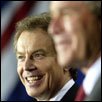 |
| Shoulder to shoulder - but wide apart? |
America's opposition to the International Criminal Court (ICC) has prompted renewed fears of a diplomatic showdown between London and Washington.
In protest at the ICC, the US administration on Sunday vetoed plans to extend the timeframe of the UN mission in Bosnia.
The US is vehemently opposed to proposals which would see international peacekeepers falling under the jurisdiction of the ICC and has vowed to block any move which would challenge its position.
Downing Street said that the Bosnia move did not come "as any surprise" given that the US had made its position on the ICC well known three months ago.
A spokesman for the prime minister said: "We do understand the US's concerns but believe that the way in which the ICC has been set up and will operate should address those concerns."
Number 10 insists that the ICC will only take over a case if a country "is unable to investigate it itself".
"That, plus the fact that cases can only be launched by states rather than individuals, is a sufficient safeguard," added the spokesman.
A meeting of the UN security council ended in deadlock yesterday after the US refused to extend the Bosnia mandate in protest at the international court.
"In terms of the US's position we understand there are a further three days before there will be any knock-on effects. Discussions will continue at the UN," said Number 10.
But following Washington's continued opposition to the Hague-based court Clare Short, the international development secretary, attacked the US administration over its decision.
"This is an enormous disappointment to everyone in the world who wants some basic rules of decency that apply to all rulers everywhere at all times that would mean a lift up for the world," she said.
"But we all decided to go on without the US. They do find it more difficult than most of us to operate multilaterally, but the rest of us think that as the world integrates and globalises we need more and more rules that apply equally to everyone.''
Downing Street added to the sense of unease by failing to distance itself from the minister's remarks.
And the Foreign Office also expressed its frustration at the US's actions. "We understand US concerns but we do not share them."
Menzies Campbell, the Liberal Democrat foreign affairs spokesman, said the government must be prepared for a showdown with the US.
"The UN and the UK must not blink. Any concession to the US on these matters would undermine our credibility and commitment to the ICC, not least because the necessary changes to domestic law have passed through parliament," he said.
"But we should not take lightly the consequences of America refusing to make available its military power for the UN.
"Missions like the I-For peacekeeping force in Bosnia simply would not have been possible without US participation. This is a defining moment in the US-UN relationship."
The clash comes at a difficult time in diplomatic relations between London and the US.
Whilst Tony Blair has vowed to stand "shoulder to shoulder" with the US, serious disagreements exist over trade policy, the Kyoto protocol and the situation in the Middle East.
Labour MPs say the US's failure to compromise could call into question any UK involvement in military strikes against Iraq.
|


