|
UK troops to come home
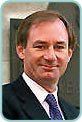
The defence secretary has announced plans to scale down the presence of UK troops in Afghanistan - but insisted the deployment has been a success at bringing stability to the war-torn country.
Geoff Hoon has told the Commons that the government will not replace Royal Marines who are set to be pulled out of Afghanistan in mid-August.
All 1700 service personnel deployed in a combat capacity will be pulled out, and between 800 and 1000 of the 1300 personnel engaged in peace-keeping activities will also head home.
Reductions will bring the total number of British forces in Afghanistan and the surrounding region down to 2000 by late summer, less than half the present complement.
"This reduction in numbers does not mean a reduction in our commitment either to Afghanistan or the campaign against international terrorism. In fact it is proof of our willingness to keep up military action for as long as it takes," he said.
The decision to scale back the UK's involvement in the International Security Assistance Force comes as the lead role is handed over to Turkey.
The cabinet minister insisted that that the mission has been a success - despite the absence of any visible sign that the combat force has destroyed al Qaeda operations in Afghanistan's most remote areas.
And he delivered a strong attack on "armchair critics" of the campaign.
"Those who carp about the `lack of action' do so from a position of ignorance about the nature of warfare," he said.
"That is one thing, it is quite another to wish that they had come under fire, which appears to have been the hope of some armchair commentators in recent weeks."
Peacekeeping chief, UK general Sir John McColl, earlier told the BBC that the situation has "improved considerably" in Afghanistan.
"I don't claim everything is perfect either in a security sense or a political sense but it has improved considerably in a relatively short period of time," he told Radio 4's Today programme.
"When we arrived here the streets were really quite empty. A great deal of lawlessness, a large number of armed people on the streets, and now we have a situation where the city has come to life."
And the outgoing ISAF commander looked forward with confidence that "the security situation will continue as it is at the moment" under the new leadership of the Turkish army.
"I have worked with the Turks before - many of us have in Bosnia - and they are a very professional, very disciplined, very well organised army," he said.
NATO's only Muslim member, Turkey is aiming have 1400 soldiers in place by July, under the overall ISAF command of general Hilmi Akin Zorlu.
"Turkey has willingly agreed to take over leadership with the aim of contributing to the peace and security that the Afghan people have long deserved,'' he said.
Welcoming the inauguration of Afghanistan's new leader, Hamid Karzai, the foreign secretary, Jack Straw, reaffirmed Britain's commitment to helping the war-shattered country.
"The Afghan people should be assured that the United Kingdom and other international partners remain committed to helping restore their country to stability and prosperity," he said.
Opposition MPs welcomed the "substantial reduction", arguing the move would ease "over-stretch" for UK armed forces.
Shadow defence secretary, Bernard Jenkin, congratulated the armed forces on "a job well done".
"We have long argued that British armed forces are overstretched engaged on more operations, with fewer resources, than envisaged in the government's 1998 strategic defence review.
"The scaling back of deployments will not just be a chance for soldiers and Royal Marines to spend time with their families. September 11 underlined that the post cold war world is dangerous and unpredictable," he said.
"The UK and our allies must keep our armed forces fully prepared for the unexpected and ready to respond at very short notice."
Liberal Democrat defence spokesman Paul Keetch said: "Bringing these forces home will hopefully alleviate the current resourcing crisis. But until the problems of overstretch are remedied, particularly in the army, undertaking any further operational commitments, in the campaign against terror or otherwise, will be difficult".
Hoon defended the MoD against claims that the troops are being pulled out because of a cash shortage due to the growth in the UK's overseas military commitments and a shortfall in the number of service personnel.
Army strength had been boosted, not reduced, he told MPs.
Downing Street said it was important to reflect on the achievements of the British military intervention in the region.
A spokesman said the performance of British troops over recent months proved the UK could combine peacekeeping duties with combat operations.
"The predictions that they were going into an impossible situation, that they couldn't combine peacekeeping and fighting a war at the same time, have proved to be wrong," said a spokesman for the prime minister.
|