|
Special advisers face new controls
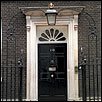 |
| No 10: Politicising the civil service? |
Special advisers face new legislative controls and an investigation of their role in Whitehall as concern grows about the "politicisation" of the civil service.
Downing Street confirmed on Monday that the government would bring forward a Civil Service Act, which could be included in this Autumn's Queen's Speech.
The announcement came as the Committee on Standards in Public Life, chaired by Sir Nigel Wicks, launched a review into the relationships between ministers, special advisers and permanent civil servants.
The Conservatives also stepped up the pressure for legislation, calling for an act to ensure the "impartiality, independence and excellence" of the civil service.
Politicisation?
The departures of special adviser Jo Moore and communications director Martin Sixsmith from the transport department have led to renewed concerns about the growing influence of political appointees in Whitehall.
Moore was accused by the First Division Association, the trade union for top civil servants, of "bullying" and failing to recognise the limits of what an impartial civil service could achieve.
Sixsmith has continued to fight a public battle with transport secretary, Stephen Byers, over whether he was forced to resign from his post by the cabinet minister.
Legislation
The latest row to hit the transport department increased pressure on the government to act.
The government's bill may include an independent watchdog to enforce the rules, a limit on the number of special advisers and a clarification of the position of advisers.
The out-going cabinet secretary, Sir Richard Wilson is next week expected to make a speech outlining the measures he would like to see included.
It has been reported that he faced opposition inside Downing Street to his speech, and it is likely to be interpreted as a shot across the government's bows, reflecting a determination among the top Whitehall echelons to ensure the continued impartiality of the civil service.
Number 10 said it would not be rushed into making its proposals but stressed that legislation would be forthcoming.
Wicks Committee
The standards committee launched its consultation on Monday, with Sir Nigel promising to conduct a "full and fundamental review of the issues".
"Some recent cases have highlighted that uncertainties and grey areas remain concerning roles and functions," he said.
The committee is seeking evidence on the functions and accountability of special advisers, the effectiveness of their code of conduct, the numbers employed in Whitehall, and how the guidelines should be enforced.
Sir Nigel said he would "not be surprised" if the committee chose to seek evidence from Jo Moore, Martin Sixsmith and others involved in the current row.
The list of potential witnesses was expanded to include Tony Blair's communications director, Alastair Campbell, and chief of staff Jonathan Powell, who are the only two political appointees with the power to give instructions to civil servants.
Sir Nigel said he would also seek evidence from a wide variety of senior civil servants, though "whether that will happen, well, I can only ask, quite frankly".
While the committee has set itself a deadline of the end of this year for producing its report, Sir Nigel said he was aware that legislation could be brought forward before the committee reached any conclusions.
He said he would be "mindful of not missing the bus on that".
Committee members said they regarded a Civil Service Act as essential for ensuring the effectiveness of parliamentary oversight, given that the civil service had been created under the royal prerogative.
Rejecting suggestions that the government often ignored the committee's recommendations, Sir Nigel said: "I don't believe that to be true. If you look at our previous reports, action has been taken on them".
A spokesman for the prime minister said the government was "very relaxed" about the Wicks inquiry.
He said the government would look closely at its proposals but stressed that special advisers played an important role in the delivery of government.
Conservative plans
The Conservatives said it was time to act, given that "concern about the politicisation of the civil service under the present administration is growing rapidly".
Shadow Cabinet Office minister Tim Collins said that while the party was not seeking to impose any single model on Whitehall. He said the opposition was contributing to the debate by putting forward its plans which could form the basis of a non-partisan consensus.
"We set out three clear principles for the civil service - impartiality, independence and excellence," said Collins.
Conservative proposals include limiting the powers of ministerial appointees to "sort out the vipers' nest of over-powerful special advisers", ban the ability of special advisers to issue instructions to civil servants and ensure that all ministerial meetings were properly minuted.
"We would boost the boost the role of the Civil Service Commission in protecting the roles of heads of information, thus addressing the underlying cause of the Sixsmith saga," added Collins.
"These are not our final ideas on how to rebalance the power of an over-mighty executive. But they offer further proof of our determination to help address the cynicism around politicians of all kinds by showing how we would restrain ourselves, as well as others, from the temptations which power can otherwise bring."
Other responses
The Institute of Public Relations, whose members include Whitehall staff, also backed Wicks committee's consultation document.
IPR President, Jon Aarons, urged transparency. "The role of so called 'spin doctors' needs to be transparent, accountable and clarified as the unregulated actions of a few have damaged confidence in the democratic responsibility of government to communicate professionally."
The First Division Association, the union for senior managers in public service, also welcomed the review.
FDA general secretary Jonathan Baume said: "This inquiry is very timely given recent events. By examining the wider structures within which ministers, civil servants and special advisers work, we can not only make sure that government operates more effectively, but also hopefully prevent a repeat of the damaging events seen recently in the Department of Transport, Local Government and the Regions.
"The FDA will continue to campaign for a Civil Service Act but an act will only make a difference if everyone involved understands their respective roles and puts in the effort every day to make the relationships work."
|


