|
Clarke calls for 'respect'
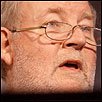
Labour chairman Charles Clarke is working with his Tory counterpart David Davis in a bid to boost public respect for parliament.
In a newspaper interview, Clarke has disclosed that he and Davis have written to BBC chairman Gavyn Davies warning against the "dumbing down" of political coverage.
The move follows a widespread debate about the causes of public cynicism with parliament and a call in Monday's Sun for politicians to learn from the success of showbiz programme makers.
Clarke tells the Guardian that while disagreeing with the Conservative chairman on policy, "he's quite serious about the role of parliament and public life in Britain".
"We intend to meet regularly to discuss how we can deal with issues in a way that will raise the standard of politics in Britain," he told the newspaper.
The cross-party approach to voter apathy and political disengagement is to be a far-reaching one and seems to be a clear indication of how serious the problem is regarded across the political divide.
Issues that the pair are to tackle include e-democracy, funding for the development of policy and MPs' relationships with academia and the civil service.
Media coverage of politics will be in the spotlight, with Clarke warning that "there are elements of the media which are actually about the promotion of cynicism".
But civil servants also attract the ire of Labour's chairman, with his belief that many MPs are more spinned against than spinning by unelected officials.
"I think there are too many civil servants who believe that politicians are a kind of sub-species who are venal in some respect," he said. "You get classic cases where the media or the institutions get it before the MP knows, even though the MP might have been leading the campaign on the issue for years."
And echoing the anger of many Commons backbenchers, Clarke argues that "there is not sufficient respect given by the system to members of parliament".
The interview comes as much press coverage of the "Pop idols" TV programme draws attention to the fact that more young people voted for contest finalists Will and Gareth - 8.7 million - than voted for either Tony Blair or William Hague in the last election.
In an editorial the Sun concludes that if politicians want respect they must learn from the "professionalism" of showbiz programme makers and manufactured pop stars.
Confronting critics such as Clarke, the tabloid, whose influence in Downing Street circles is legendary, brands those concerned about political dumbing down as "bores".
"When BBC director general Greg Dyke [says] that politics is turning people off, he has a point. Dyke has been wrongly accused of dumbing down politics to attract more viewers. His critics are the same kind of bores that constantly criticise the Sun. Truth is, it's the politicians who have the problem - they simply cannot appeal to a mass audience. This is no fault of the media," the Sun says.
The BBC have moved to reassure Clarke and Davis that corporation plans to "develop new ideas, formats and approaches, which will broaden the range and reach of our programming and attract new audiences for politics" will not detract from its current programming.
"I can reassure you immediately - no-one at the BBC has any desire to reduce or 'dumb down' our political coverage, and this will not happen," Gavyn Davies said in a reply to the two party chairman.
|