|
Assembly loses legal battle with architect
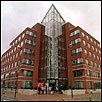 |
| Now: current building |
The leading architect Lord Rogers has won his legal battle with the Welsh assembly over his fees for designing its new chamber.
The National Assembly for Wales revealed on Wednesday that it had lost his legal dispute for the £380,000 of fees he claimed he was owed from work on the assembly's new high-tech building.
The architect had been sacked because members felt the project's costs were spiralling out of control.
The assembly will now have to pay the peer, after a counter claim for £6.8 million against Rogers failed.
It was also confirmed that Richard Rogers Partnership is to hand over to the Assembly documents which the firm had withheld until the payment was made. Copyright ownership has also now been transferred.
The award-winning architect, whose work includes the Pompidou Centre in Paris, had already been paid £2.5 million in fees.
He has blamed many of the problems that have dogged the project on the assembly.
Despite the row he still wants to finish the building and is lobbying with a consortium for the contract.
The building, due to be handed over in 2003, will comprise of a debating chamber for up to 60 members, exhibition space and media facilities.
Situated next to the Grade One listed Pierhead building it will, according to the company, "symbolise democracy by encouraging public participation".
The legal embarrassment is the latest chapter in a long-running saga.Welsh assembly members have already been told that when the building is finished it will be smaller than planned, over budget by up to £47 million and late.
Spending watchdogs have warned that the new headquarters will be smaller than originally planned, much more expensive and will not be built on time.
|


