|
Ken takes a gamble on congestion charges
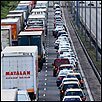
Ken Livingstone has taken his biggest political risk as London's mayor by giving the green light to a controversial road congestion charging scheme.
Signing an order for a Transport for London congestion charge scheme, Livingstone set the "go-live" date for road tolls as Monday February 17 2003.
"As a result of what I am confirming today, for the first time there will be a serious attempt to tackle the chronic traffic congestion in central London. On TfL's estimates the scheme will raise a net revenue of £130m-£150m annually," he said.
"One thing was certain: whatever decision I reached would displease some."
Legal action is already threatened against Livingstone's flagship measure to tackle car gridlock on the capital's roads.
Polls show that Londoners are split on the move - with 43 per cent opposed and 42 per cent in favour.
The Tories have called on the government to halt a policy that lay at the heart of Livingstone's mayoral 2000 campaign.
Some Labour MPs believe that without first delivering improvements in transport infrastructure the proposal to cut traffic by 15 per cent is the "wrong scheme at the wrong time".
Livingstone is set to push through the £5 charge for motorists entering the capital's centre before May 2004's London elections, arguing that an expected £150 million in revenue and quieter roads are a price worth paying.
Westminster Council is the first of London local authorities to threaten legal action against congestion charging, with plans to test the scope of the mayor's powers with judicial review.
"If the mayor decides to proceed with congestion charging, we will urgently consider whether there is scope for a judicial review," said the council's deputy leader, Kit Malthouse.
"Similarly, if the mayor decides not to have a public inquiry into this highly controversial scheme, we will also consider whether that decision in itself is one to be judicially reviewed."
Livingstone has rejected call sfor a public inquiry, something he claims would "the easy option".
"On balance - and I recognise that there is a perfectly respectable case for holding a public inquiry - I have decided against doing so," he said.
"I am satisfied that the issues raised are sufficiently clear to me, that I have sufficient information about the scheme and its impacts, and that I am able fairly and properly to assess the information and weigh conflicting views without holding a public inquiry."
The shadow transport secretary, Theresa May, has attacked the charge as a "sort of stealth tax, trying to price the motorist off the road".
She raised questions over the "untried technology" involved in the scheme.
Although the Greater London Assembly's Labour group accepts charging in principle ,it raises objections to Livingstone's "flawed" proposals. They say it will allow paid-up drivers to cross the charge line in and out of the city centre as often as they wish.
Ilford South MP Mike Gapes believes the idea may be the mayor's undoing if public transport infrastructure remains unimproved.
"Congestion charging is the wrong scheme in the wrong place at the wrong time," he said.
"I think it is ridiculous and foolish to introduce congestion charges before you have improvements in capacity on the Underground system. I think if he goes ahead and forces it through in February it could well be a serious problem for him."
Environmentalists have welcomed the move as good news for Londoners.
Stephen Joseph, director of Transport 2000, described the charges as "the best transport news for Londoners since the opening of the first Tube line in 1863".
"At last there is a real prospect of breaking the log-jam in the city centre," he said. "It is also the key to speeding up bus services. These have already been expanded to cope with extra passengers, but without congestion charging no substantial improvement will be possible for another decade."
|