|
PMQs sees normal service resume
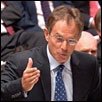 |
| Fighting talk: Blair |
Railtrack and the NHS dominated a prime minister's question time that saw a return to the more normal rowdy Commons debate.
The Conservatives saw a more confident Iain Duncan Smith at the dispatch box but no victories for the leader of the Opposition. In a clear change of tactics, the war was off the agenda as the week had presented ammunition of a different kind.
IDS opened with Railtrack, after the debate had been put on track by a Tory whip. Duncan Smith questioned the judgement of transport secretary Stephen Byers and his recollections of meetings with rail executives.
The chairman of Railtrack was not the first person to disagree with the version of conversation with Byers, he claimed. The BMW chairman had also had a dispute during the Rover crisis and a committee had recommended that the Byers telephone should be tapped.
"They don't want to listen to this," the Tory said above the row from Opposition benches. "Just what does it take for the prime minister to lose confidence in a minister."
Tony Blair returned with the government's now-familiar response that the company was in crisis long before it was put into administration.
"What was clear is that things could not go on as before," the prime minister said adding the problem had been largely caused by the Conservative privatisation.
Duncan Smith claimed that the PM had "stood by and watched as small investors and railwaymen bought shares he knew were worthless because he had already decided to send Railtrack to the wall".
Blair challenged the Tories to say whether they supported the shareholders demand for £3.60 for each share in compensation, saying that would cost the taxpayer £1 billion or £50 for every household, cash he believed would be better spent on the railways.
"When have you cared about railwaymen?" brayed the Labour backbenches.
The Tory leader said "there is no remorse, no regret and no resignation," before describing Stephen Byers as "the unacceptable face of new Labour.''
"You're flogging a dead horse," came the verdict of Labour's Dennis Skinner.
Labour backbencher Paddy Tipping suddenly found himself lost in a land far, far away - once inhabited by President Bush in lighter times - ruled by a president Mustapha. He stopped, with a face saying "mustapha-nothergo" and found himself calling for president Musharraf of Pakistan to back a concise military campaign.
The prime minister replied the Pakistani general, due in Downing Street on Thursday, had taken a very brave and principled stand. "It has not been easy for him," said Blair.
When Liberal Democrat leader Charles Kennedy got to his feet, the Labour benches were fully enjoying the return to "normality" and gleefully cried "squeak" at him.
Kennedy questioned the humanitarian aid effort in Afghanistan and asked if the prime minister would support President Chirac's call for a high level donor meeting.
Blair said it was "a sound idea", "I also believe it is essential and obvious that the aid gets through," before calling on the Taliban to co-operate with UN aid agencies.
Kennedy called on Blair to get a reassurance from Bush that "no more [cluster bombs] will be used".
The prime minister refused saying the bombs had been used on just five occasions including an attack on an al Qaeda training camp.
"There is no easy or pleasant way of fighting a conflict like this," he told the Commons. "If we want this conflict to be brought to an end quickly, we have to fight it vigorously,'' he insisted.
Iain Duncan Smith then switched attention to the NHS asking if the prime minister agreed with his health minister "that the winter crisis now ends in July and begins in June?"
The people who use the NHS knew it was not changing and the government was now missing many of its targets, he claimed. "Members of the public are entitled to ask where has all the money gone?"
Blair read out the "ticked" items on the government's shopping list including 500,000 more operations and 17,000 new nurses. There were still fundamental problems in parts of the NHS but progress had been made.
The prime minister, using the general election retort, told the Commons there was one difference between Labour and the Conservatives. "We want the money to go in, you want to take it out.''
Duncan Smith accused Blair of talking "endless, endless nonsense" before reading out a letter from an orthopaedic doctor describing parts of the NHS as a "nightmare".
The NHS was failing because New Labour put dogma before the needs of patients. "The crisis in the NHS is for life, not just for Christmas."
Blair retorted: "He read it, he read it wrong and it wasn't worth reading anyway".
Reform of the Lords, which over the coming months is likely to generate fireworks from reformers and traditionalists on all sides of the Commons, barely featured in the debate.
Asked to give three good reasons why there should not be an elected rather than "anointed or appointed" second chamber, Blair said it should not be wholly elected.
The Lords should remain as it is now, said Blair "a deliberating and revising chamber, not a replica of the House of Commons made up solely of professional politicians".
|


