|
Blair: 'No tax cuts'
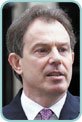 |
| Calming: Blair |
Tony Blair has told business leaders that long-term investment must come before short-term tax cuts.
Speaking at the CBI's annual conference in Birmingham, the PM said the terrorist attacks in America had affected the global economy and that was why terrorism had to be defeated.
"The effect of 11 September on world economic confidence, not to say on airline and tourist industries, is there for all to see. And we know they would commit further atrocities if they could. So winning the battle against international terrorism is to win for the economy too. Jobs, living standards, business and trade need us to defeat this terrorist menace," Blair said.
"However, even before 11 September, the world faced a more difficult economic climate. The US, Japanese and European economies were already slowing," he added.
Blair said that of all the G7 countries, Britain was best place to ride out the economic storm.
"Britain is not immune from such changes in the world economy but is better placed than any other G7 country to weather them. The fundamentals of our economy are the strongest they have been in a generation," he said.
Countering press reports that taxes would have to be put up in order to pay for the war in Afghanistan, Blair promised that the government's investment programme was not under threat, but ruled out short-term tax cuts.
"The investment programme is vital for future economic success. It is also a timely economic stimulus at a time of slowing growth. It has to be funded. We will keep taxes as low as possible. But, as I have said before, long-term investment must come before short-term tax cuts."
Making no new announcements, the prime minister's speech was primarily aimed at calming nerves in the city as the economy continues to be hit by a US-led downturn.
But his speech did contain one hint of his personal support for the euro, with the PM arguing that membership of the European currency could help Britain's beleaguered manufacturing industry.
"I fully acknowledge that with the slow down in the world economy and the weakness of the euro, life has been and is tough for manufacturing in the UK. This is one reason why the euro could be of benefit to manufacturers," he said.
Rejecting business claims that Labour was the party of red tape he promised that Britain would not lose its reputation for a flexible labour market by returning to the industrial relations of the 1970s.
Blair defended the government's handling of Railtrack but pledged investors that they would not go uncompensated.
"The simple truth is that we could not justify pouring ever more public money into a business that was going bust and failing to deliver. Shareholders will receive what they are entitled to. We have secured the position of lenders, creditors, and employees," he said. "Our new structure for the railways, including simplified regulation, will be resolutely focused on improved service quality for passengers and freight users. The investment is there. Investment in the tube is there too. We now need a structure that delivers."
The prime minister reaffirmed his commitment to continue Labour's close relationship with the business sector and reminded his audience of Britain's new status as a world leader.
"Sometimes we over-state our problems and under-state our achievements. We must remember the strength of our economy - especially in these uncertain times," he said.
|


