|
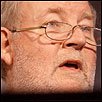
Front runners in the race to take over
Welsh secretary Paul Murphy and Scots secretary John Reid are being tipped as likely successors to Peter Mandelson - with Home Office minister Charles Clarke being seen as an outside chance.
Paul Murphy is currently the Secretary of State for Wales but has a long understanding of the complex issues involved in Northern Ireland. Murphy was Labour's spokesman on Northern Ireland from 1994 to 1995 before moving to foreign affairs and defence. The Oxford graduate was previously a management trainee and lecturer in government before becoming an MP.
After the 1997 election he was appointed minister of state at the Northern Ireland Office with specific responsibility for political development. After the negotiation of the Good Friday Agreement he was appointed a Privy Councillor in the 1999 New Year Honours. He is well-respected among the major players and would be seen as a safe pair of hands at a crucial time in the peace negotiations.
Also tipped is the Scottish secretary, John Reid. A straight-talking Scot, Reid is seen as the kind of politician who could meet the province's best, and worst, on a level playing field. A former adviser to Neil Kinnock, Reid is well-versed in the arts of behind-the-scenes politicking, although he recently run into trouble after is was alleged he misused House of Commons staff. Any post involving him could see the creation of a new "secretary of state for the Isles" - covering Scotland, Wales and, possibly, Northern Ireland.
Clarke is the Cambridge-educated Norwich South MP and was appointed a minister of state under Jack Straw in 1999 after serving as an education minister. Clarke is seen as metropolitan Labour high-flyer with a long career of working in the party. He is the son of Sir Richard Clarke who was the permanent secretary at the Ministry of Technology under Tony Benn.
His only noted lapse "off-message" was over lone parent benefit cuts in 1997 when in a letter to Harriet Harman he said that "everyone in the PLP is outraged by what the government is doing" - though he did not actually join the rebels in voting against the government. The former Marxist radical was president of the NUS before joining Neil Kinnock's staff in 1981. He was one of the co-writers of Kinnock's now famous anti-Militant speech at the 1985 party conference.
|