|
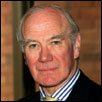
Menzies Campbell MP - Liberal Democrat foreign affairs spokesman
Menzies Campbell MP
Question: There are rising concerns about Iran and North Korea's nuclear capabilities. Do they pose a greater threat than Iraq?
Campbell: It's a different kind of threat. Iraq poses no threat to the region and is unlikely to do so for the foreseeable future.
But Iran and North Korea are problems of a different scale and have to be dealt with differently.
I've been entirely supportive of the government's view that there should be dialogue with Iran.
But Iran has got to realise that if it is using civil nuclear power as a cloak for nuclear weapons aspirations then it will make it very difficult for that dialogue to continue.
The IAEA has given Iran until the end of the month to indicate its willingness to comply with its obligations under the nuclear non-proliferation treaty.
Iran is at a crossroads because if it does go on in a way which is interpreted as being part of an effort to obtain nuclear weapons capabilities then it will alter its relations with, say, the EU.
But we have to remember there are different power centres within the Iranian government.
We have invested quite a lot in Khatami because he has shown himself to be more progressive. But he does not have universal authority. And the more we praise him the more easily he can be characterised as being in the pocket of the West.
With North Korea, we know it has the missile technology and could be close to having a nuclear capability.
It's the fusion of these two that would make them very dangerous players.
What we've got to do is show a collective approach to North Korea involving the US, China, Japan and, of course, South Korea.
North Korea is, if not a failed state then certainly one under pressure. It's unable to feed its people, locked in Stalinist doctrines of the 40s and ruled by someone who is erratic. It has the potential to cause a great deal of damage.
The risk is that the North Korean government falls into 'adventurism' to deflect from its domestic failings.
Question: With US presidential elections due next year, is the Middle East roadmap effectively finished?
Campbell: There will be no new foreign policy thinking once we get to the Iowa caucus and the New Hampshire primary in January.
Bush's profile on this has been of determination to lump states together under the 'axis of evil'. It is very difficult to see his administration taking up any position which is inconsistent with that State of the Union address of 2002.
The prime minister tried to sound optimistic at PMQs this week but the news that three US officials have been killed may have a disproportionate effect on progress.
Already the Israelis are saying to the Americans 'this is what we have to put up with'.
There's already suggestions that the US position is likely to be harder and more sympathetic to Israel's efforts in Gaza which are counter- productive.
These reinforce the view of the Palestinians that they are being persecuted and that Israel can operate with impunity.
Question: What do you think President Bush has actually achieved in foreign policy?
Campbell: That would be a very good examination question, wouldn't it?
Well, I think he would have claimed to have brought about regime change in Iraq and if that was his objective then he's achieved it.
I don't think he's achieved the sort of settlement post-regime change which he envisaged. And there is some doubt as to when or if ever he may achieve such a settlement.
And at what cost has been regime change? It's been deeply damaging to the UN and its authority, deeply damaging to NATO and damaging to the trans-Atlantic relationship.
If you draw up a profit and loss account on President Bush's foreign policy you wouldn't need too much creative accounting to reach the conclusion that he had made net losses.
Question: That's a pretty bleak assessment, isn't it?
Campbell: Well, I don't start from any kind of visceral anti-Americanism. I'm strongly in favour of the trans-Atlantic relationship.
We need to persuade President Bush and subsequent administrations that multi-laterism is vital in Europe because we don't have the battalions.
But we shouldn't fall into the trap of imagining that a change of administration is necessarily going to bring an immediate volte-face. The seeds of 'unilateralism' were sown in Clinton's time.
He refused to sign Kyoto and only backed the International Criminal Court at the last minute to embarrass Bush.
A change of administration will not necessarily mean a sea change in policy.
Question: Was the reshuffle this week a sign that the party may be shifting to the right?
Campbell: It was a reward for competence and ability and it is an effort to make maximum use of the talent that is available.
I hope it anticipates a return to a more traditional approach of personal freedom about which I feel very strongly.
I think we have to make sure we don't fall into the trap of becoming the defenders of all that takes place in the name of public services when we argue for good public services.
The parent of the child, the passenger on the train and the patient in the hospital - the three Ps if you like - are the reason why public services exist in the first place. We should never forget that.
Question: It's simple and fair to ask if the party is to the left or right of Labour, isn't it?
Campbell: Charles Kennedy has been quite right to say that left-right doesn't matter any more.
Let me give a practical illustration. When I first started knocking on doors at elections there was an awful lot of 'we've always voted Labour here' or the wife would come to the door and say 'my husband's a Conservative' and that would be the end of the conversation.
There's no doubt in my mind that these traditional loyalties have been disturbed. The old notions of left and right are much less relevant. I don't think they've disappeared entirely but they are much less relevant.
Question: Can a strategy where you try and pick up disillusioned left-wing Labour voters in inner cities whilst appealing to disheartened Tory voters in rural areas ever be a recipe for success?
Campbell: Ask me what do they want. They want a national health service which is properly funded and is not effected by the sclerosis of central domination. That's entirely consistent with us.
We're in favour of spending the money on the NHS and we're genuinely in favour of the delegation of responsibility.
I don't know if that's left or right but what I do know is that it strikes a very substantial chord with the population.
Take education. People want their children to have the best possible opportunity and they want the necessary investment. But what they are also clear of is that they don't want them tested to distraction because of some obsession at the centre with targets.
Whether that's left or right, again I don't know but I think it's policy which is attractive to the majority of the electorate.
Question: As you get more successful won't you need to get more disciplined - even if that means making your conferences more stage-managed and anodyne?
Campbell: Well if you'd ever been to any of the old Liberal conferences in the old days then in comparison what we have now is a Rolls Royce instead of a Ford Popular.
We used to live through some pretty hairy moments with the old Liberal conferences. The SDP was never quite like that; they were always better disciplined.
I think we've got the balance just about right. We had more hours of debate than the others - that tells you a great deal. And people still debate motions. We don't have a series of carefully manicured platform speeches.
What we do have to be careful about is that we have to be seen to be concentrating on the mainstream and not allowing ourselves to be diverted into some areas which may be of some interest but are not directly relevant to mainstream politics.
Question: Does the party need an Alastair Campbell figure if it's to replicate the kind of successes you'll need to see if Kennedy's to get to Number 10?
Campbell: I don't think we're in the business of needing an Alastair Campbell. We have an extremely effective press operation. It is, again, a Rolls Royce compared to what it was when I first came to the Commons. And again I think we've got the balance about right.
I don't think any Liberal leader would want to be subject to the influence of one man to the extent Tony Blair was with Alastair Campbell.
Question: Wasn't the claim that you'll be the official opposition by 2009 a case of setting your sights too high... and inevitably preparing for a fall? Remember the ill-fated Scotland free by '93 of the SNP?
Campbell: What I argue is that this is a time of opportunity. It's not a time of certainty by any stretch of the imagination. But the gap is there, created by the levels of disappoint with the government and disillusionment with the Conservatives.
The gap is enormously wide. The question is are we able to be disciplined enough and committed enough to fill it. I think we are but we will only achieve what is possible if our commitment and discipline is of the highest order. Any hint of complacency and we'll simply get knocked back.
|