|
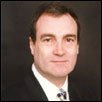
Dr Stephen Ladyman MP - minister for health and social care
Dr Stephen Ladyman MP
Question: Do you think the government needs to pay more attention to policies for older people?
Dr Stephen Ladyman: Yes. There's always more than can be done, but it's a massive part of our agenda. It's a massive challenge as well, there's no question about that.
A huge budget for the National Health Service, for example, goes on the care of elderly people, a huge part of the social care budget goes on elderly people and there's always more that we can do, but no, I think it's right up there amongst the top priorities for the government.
Do you think it is becoming a more important area politically, particularly with talk surrounding a growing "grey vote"?
Dr Stephen Ladyman: People are always trying to make politics out of it, but for us it's never been an issue, it's always been one of our top priorities, right from the first day we got in, in 1997.
It's not as if we've suddenly thought, "oh, come on we've got to start worrying about the grey vote", it's always been a top priority for us, and it's going to stay that way irrespective of the fact that the opposition parties seem to have discovered it belatedly.
Question: Labour MP David Taylor has called for an older people's commissioner - is that something you would back?
Dr Stephen Ladyman: I've met David and I've given him the opportunity to put his case to me. It's not something that immediately strikes me as being the way forward, because there are a number of other things that we've got in the pipeline that effectively would mean an older person's commissioner would have very little power because everything would be covered by other people, for example we are looking at how we are going to manage human rights legislation in this country, that's something that's going on at the moment.
And if we decided to create a human rights commissioner, which is one of the proposals that are being made to us - we still have an open mind about that - that would take up a big chunk of what he's proposing for an older person's commissioner.
There's work going on looking at the equalities issues and a consultation document has already been issued, so that would take up a big chunk of it as well. Plus there's me as the minister responsible for social care, and Maria Eagle, whose the minister responsible for older people in the Department for Work and Pensions so it strikes me that between us we've got it covered. But I've listened to his arguments and I'm still reflecting on them but I don't immediately see any merit in pursuing that line.
Question: How do you respond to criticism that increased regulation in the care sector is causing the closure of care homes, and therefore increased bed blocking?
Dr Stephen Ladyman: I'd say that's the biggest load of cobblers that anybody has put to me. Anybody who looks at the contraction of the care home market with any sort of objective eye will see that it began with the Community Care Act of the early 1990s and that completely changed the way that people were assessed for care home provision.
Prior to that, people would go into care homes and their bills would be paid by the then-Department for Social Security.
That bill changed it so that you needed a care assessment in order to go into a care home and it was implemented from the mid-1990s onwards, and it's quite clear that there was a general expansion of care home capacity in this country until about 1995, and then when that bill kicked in, the care home market has been contracting ever since. And the simple fact of the matter is that in that contracting market place we have a buyers' market.
That means that there will always be pressure on prices from the point of view of the care home owner, because he's competing with a lot of other people.
If we look at the figures at the moment, there are 460,000 care home places in the country - these are Laing and Buisson figures, not mine - and there's only 450,000 people wanting to go in them, so there's still 10,000 more care home places than we actually need.
And if we look around the country, at local issues, there is nowhere that we've been able to find where there is any sort of local shortage of care home places.
There are sometimes a shortage of places at the place the local council wants to pay, but there is nowhere where there is actually an absolute shortage of places, and that's why we've given local councils the money to manage the care home market locally, so they can decide what the fair price is locally.
Introducing regulation has only served to say that there are minimum standards that we require for older people.
There was always regulation going on in the country anyway, it's just that that regulation was administered by local councils that had their own standards, and they had their own levels of rigour as to how they regulated their own standards.
And what the care home sector was saying to us was "we want one set of standards and we want one set of regulations so we know we've got a level playing field".
And that's all that we've done by introducing regulation to say we require certain things for the people who are living in care homes, we require a certain minimum standard, we want to drive up standards, and we intend to inspect to make sure people are meeting those standards.
And for the life of me, I don't see how anybody can possibly argue against that sort of approach and indeed the main care home lobby groups do not argue against it, and they're the first to say, "we do need standards and we do need them properly regulated".
Question: The National Autistic Society has called for more services for people with autism to be provided by the Scottish executive - what plans are there for extra services in England and Wales?
Dr Stephen Ladyman: Well, Scotland's none of my business of course, so I'm not answering for Scotland, but what we're doing in England is we're just going through the process of producing a national service framework for children, that national service framework will have autism exemplars in it, and we will then set about implementing the standards that come out of that national service framework, and I foresee the national service framework for children creating a sea change in the standard of care for autistic children.
We need to also make sure, of course, that services for all age groups of autistic people are improved and that's work that we've also got in hand and it's a piece of work, of course, that as a former chairman of the all-party autism group is very close to my heart.
Question: How do you explain the rise in the number of cases of autism, if not from the MMR vaccine?
Dr Stephen Ladyman: Well, the vast majority of the increase is due to the fact that we're much better at detecting autism now, we include many more things in the spectrum for autistic spectrum disorders.
So, for example, we now include Aspergers as an autistic spectrum disorder, whereas previously it was seldom diagnosed at all and when it was it probably wouldn't have been counted with the figures for autism.
And in the old days, what people generally referred to as autism was the traditional Kanner type of autism, the very severe form of autism, and that was more or less all that people every counted as autism.
But now we realise as a spectrum of disorders, from Kanner at the one end to Aspergers at the other.
We include a whole raft more people in that spectrum, I mean now, for example, people have speculated that Albert Einstein was autistic and probably had Aspergers.
Well, when Albert was a boy nobody would have thought of classing him as autistic, now they would. So there's a far wider spectrum, so that's one of the factors.
And underlying that, I think there may well be some sort of underlying increase in the number as well.
But what I am as certain of as I can be is that it has nothing to do with MMR and there is no reliable piece of science that links MMR and autism.
The work that Andrew Wakefield did, if you actually discuss it with Andrew as I have, even he does not make a direct link.
All he has done is he's identified portions of measles antigen in gut tissue of people with autism.
Well, he doesn't have any reason to believe that that measles antigen came from MMR, it could just as easily have got there from single vaccinations, from native, from wild measles, and even if it did come from a vaccination programme, he's got no reason to link it to the autism itself, he simply makes an intuitive leap without evidence as part of his process of hypothesising.
And he would be the first to say that he has no scientific evidence to make that link.
Question: Why has the government failed to convince the public that there are no dangers in the MMR vaccine?
Dr Stephen Ladyman: Well, one of the reasons is that, and I don't mean to be critical of you personally on this, but one of the reasons is that the media in this country is absolutely awful at handling science.
It's only interested in reporting science when it's either "shock horror" stories or its "breakthrough imminent" type stories.
And it's certainly not interested in reporting the detail of scientific reports.
There are very complex arguments involved in MMR and the reasons why we want to vaccinate with MMR.
They involve concepts like herd immunity, which provides a level of immunity to people who are not vaccinated, because there are some people who genuinely cannot be vaccinated because they're allergic to the vaccination process, for example.
The only protection those people get is when the whole of society establishes something called herd immunity.
Now herd immunity is only achieved when you get very, very high levels of immunity. And we know from all the data that the only way we'll achieve that high level of immunisation, when herd immunity kicks in, is when we're using a triple vaccine, and simplifying the process of delivery.
Now these are very complex arguments, and unfortunately it's very difficult to get them over in the media, who would much rather give pages and pages of room to speculation and misinterpretations of scientific evidence, rather than to deal with the real evidence.
Question: Would you cite that as a reason why there has been more of a public scare here than in other countries that use MMR?
Dr Stephen Ladyman:Yes. I think in those countries their media is sometimes more responsible about dealing with scare stories. And also I think - and I have to say there is a certain amount of leaping on a political bandwagon when it came to MMR - it was seen by certain people with a right-wing agenda in this country as an opportunity to attack the prime minister and the Labour government.
It's disgraceful the way they leapt on the bandwagon and tried to exploit it, and certain parts of the media wanted to help them do that, and the consequences are that the people who did that will have inflicted serious damage on many people in our community.
I'll give you an example; the side effects of measles, when somebody gets measles, is damaged by it, are absolutely heartbreakingly awful. I mean everybody thinks that measles is just this slightly unpleasant opportunity to have a fortnight off school, and fortunately for most people it is.
But for those people who get the serious side effects... it can kill, of course.
And there is a type of side effect to measles which leaves people unable to communicate with the outside world but still with a functioning brain, so no sensory perception at all but inside the shell that's left is a brain that's working, if you can imagine the torture and the nightmare that that must bring to people that suffer that side effect.
And that's what happens if you allow immunisation levels to drop. And people who've used it as a political football should be ashamed of themselves.
Question: What steps can the government take to encourage more people to enter the profession of social services?
Dr Stephen Ladyman: Well, we can do a number of things. First we can try to raise the esteem of the social care professions, and that's something I've been trying very hard to do, reminding people of the contribution they make.
Again, the media always like to pick up when somebody makes a mistake. We saw the tragedy of Victoria Climbie. But we have to remind people as well that for every one tragedy there are tens of thousands of people who are protected every day by people in the social care professions.
So that's one thing we can do. Secondly, we're advertising, we've had a very successful magazine campaign to attract people to take an interest in becoming social workers.
We're also starting an advertising campaign to include the TV this winter for social care workers.
We've introduced the new degree for social work, we're taking other measures to establish social work as a genuine profession in its own right to stand up there in reputation alongside GPs and other professions.
So there's a whole raft of things that we can do to raise the esteem of the profession and to attract people into it, and we're doing them.
Question: You mentioned the case of Victoria Climbie - how badly have they affected the numbers of people going into the profession, particularly men, for example?
Dr Stephen Ladyman: Well, they have dramatically impacted on it because people think they're going to be blamed for everything, people don't realise the positive good that they can do if they go into the profession.
And they've made it look like a high risk profession where you're dealing with very unpleasant people, because the people who do that sort of thing are very unpleasant and you have to deal with them, and you're not going to get any rewards or any respect from society for doing it.
So that has a negative impact. What we have to do now is to show people that actually going into these caring professions is a wonderful contribution to society, you'll make a positive benefit to society, and we'll support you when you're in those professions.
|