|
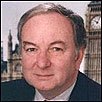
Rt Hon George Foulkes - Labour MP and Britain in Europe council member
George Foulkes MP
Question: Would you say there is a sixth test for entry to the European single currency, that of whether or not you can win a referendum?
George Foulkes: Helen Liddell, when she was Secretary of State for Scotland, said the sixth test was the cost of not going in and I think that was a very good political argument.
It was not meant to belittle the five tests, diminish the five tests, in any way, but meant to say that, as well as those economic tests, you also need to think of the implications of not being a member. So that was being identified as the sixth test.
As far as the euro point and describing it as the sixth test, I think that is a political judgement, which clearly has to be made. I can understand that some people might be reluctant to spell that out. But clearly anyone who is, as I am, enthusiastic about Britain's membership of the eurozone, who thinks we ought to be in the euro, who thinks that it is absolutely vital as far as Britain's long-term role in Europe is concerned, is anxious that we choose the most propitious time politically to put it to the people to make that decision.
So, and not in a cynical way - I think that can sometimes be interpreted cynically, but in a way that when they are being asked to vote for or against Britain's membership of the eurozone, they actually vote on that basis, on that subject, and not use it as an opportunity to express their criticism of the government on any other issue, whether it be the state of a particular public service or anything else. We need to consider that as far as possible, politically possible, the decision is being made on the issue.
Question: Isn't the lesson of New Labour that to win an election is a long, drawn out affair and as a result you are tearing up your own rulebook with this particular vote?
George Foulkes: Well, I think quite the reverse. I think what Gordon Brown said on 9 June and Tony Blair said on 10 June, along with Gordon Brown, is precisely learning the lessons of elections and campaigns in the past that you can't leave it to the last minute, that you have to spell out the advantages of Britain's membership of the eurozone.
We've accepted it in principle, the government has reaffirmed that, we are now getting every Cabinet minister and junior minister to go around the country talking about it, MPs - the vast majority of Labour MPs are in favour of the euro - are being encouraged to go around and talk to their constituencies talking about it, to have business breakfasts or business lunches about the euro, to find every opportunity to raise it.
And I think it is by doing that that we will make it clear that it's not just going to be a four-week campaign, or even a three-month campaign. It is going to be spelled out certainly over the next less than 12 months till you get to the Budget of next year and then whenever it is decided that the referendum campaign is going to be, so it is actually making sure that the case is built up over a period of time.
Question: There does seem to be a continual effort to pull the chancellor behind the prime minister on the issue of the euro, take the Mansion House speech - is that a problem?
George Foulkes: I don't think so. There were various interpretations of the Mansion House speech, and my interpretation of it was that it was very much a reiteration of what he said on 9 June.
And I think what he's saying, which I agree with, is that he is passionately in favour of the European ideal, that - not the euro - but the whole concept of European cooperation - of the European Union, of working together, the Common Market and beyond the Common Market, he's very enthusiastic about that.
As far as the euro is concerned, he reiterates that we're in favour of it in principle, but again reinforces that it would be counter-productive to consider and to put it to the people that we should go ahead at a time where it may not be advantageous as far as the British economic interest is concerned.
And I think those are the three main messages that he keeps repeating - enthusiasm for the European ideal, approval of the euro in principle, but ensuring that nothing is done to damage the United Kingdom's economic interest.
Question: To date there is the sense that the anti-euro camp has been doing all of the running. That's a problem for you isn't it?
George Foulkes: I don't think the anti camp has made as much impact as sometimes they are given credit for.
I think the fact that more people are recorded as being against the euro in opinion polls is no credit to them particularly but just a criticism of our campaign - certainly I would accept that of the pro-Euro campaign - and basically a fairly widespread ignorance of the issues, which we need to overcome.
And I think we've got the lead from Gordon Brown and Tony Blair now, but I do think, and this is something that Britain in Europe needs to tackle over the next few weeks, that we do need to get this message out to every corner of the United Kingdom.
We need to get every Labour MP who's in favour, and that's about 95 per cent of Labour MPs, every Liberal Democrat MP who's in favour, and that's about 99 per cent of Liberal Democrat MPs, and every Tory MP who's in favour, and there are a number of those as well, and every nationalist MP who's in favour, and MSPs, and councillors and activists of the parties and people of no political activity at all, we need to get them talking and thinking and acting "euro".
Now that can be done, but it needs a different kind of campaign than is currently being organised by Britain in Europe and that's why there are now underway a number of meetings of people involved in the campaign, at the local and national level, to look at the best way to revitalise that campaign, and to make it worthy of the lead that has been given by Gordon Brown and Tony Blair.
Question: Your camp still has no figure with whom the public can identify - is it time for Tony Blair to appoint a euro ambassador to get out and sell the euro to the people?
George Foulkes: Well, I'm not sure that is the right way of doing it. I think Tony Blair and Gordon Brown and all the members of the Cabinet and of the government have got to be identified with it.
The majority of MPs who support it have to be identified with it. Other people, and there are a whole list of people in business, in other walks of life, who support the euro campaign who need to be identified with it.
What we certainly do need is a more clearly focused leadership of the campaign in the country, of the popular campaign and that is something that does need to be tackled over the next few weeks, and some of us are trying to - to get that message over.
Question: So would you accept that it would be better to have a politician running the campaign than somebody like Simon Buckby?
George Foulkes: I think it's better not to deal in personalities on this, and the Britain in Europe campaign has had - up to now - some notable successes and not least in ensuring that the statement that Gordon Brown made was really positive.
We've moved on to another phase now, and I think it's important to reassess the way in which the message to the public, and the popular campaign, is organised and how best to get that message over to the public.
Question: So to characterise the campaign to date, would you say that it wasn't a bad start, but it could have been better?
George Foulkes: Yes, I think that the pro-euro campaign up till now has achieved notable successes in particular in making sure that the government has reaffirmed its commitment to the euro, that the prime minister and the chancellor are personally involved and are mobilising politicians to get involved.
What we need to do now is fill in the other part of the jigsaw, which is mobilising the public and getting the message over in a popular and effective way.
And that means using our friends in the media, and we've got enemies in the media, using our friends in the media more effectively because there are newspapers and people in the media who are very strongly supportive of the euro, and who are straining at the bit to get the message over.
We need to mobilise that and it needs to be reassessed, we need to assess the most effective way of doing that.
Question: So in terms of mobilising popular support, if I were a granny in Ayrshire and my biggest trip was to the supermarket, what would joining the euro do for me?
George Foulkes: At the moment, it's true to say that the people who are less likely to move from their own community and are just contemplating how it affects their shopping pattern and their shopping activity it means very little.
But there are millions of people in the United Kingdom who travel overseas now, and it is vitally important from their point of view that we go into the euro to make it easier, as they find moving from France to Germany they don't have to change their money and it's much more easy to do that.
As far as people who are less likely to travel, it's their employers who are going to benefit by having reduced transaction costs, so that their operations will become more effective.
Also, by making sure that you get more investment from Europe in the United Kingdom, more jobs will be created. So employers, I think, need to be mobilised to get over to their employees that it's going to help their companies to be more cost effective, and it's going to help them as far as investment to the United Kingdom is concerned, by creating jobs.
So whether the granny won't see a direct effect, but her grandson or granddaughter will see an effect by, not just in their travel overseas, but in jobs that are created for them and companies that are more successful and more profitable.
Question: Surveys of travellers have found that the fourth most enjoyable part of their holiday is using the foreign currency - why deny them that?
George Foulkes: Well, I don't think that's the case. I mean, what we're finding in Northern Ireland - Northern Ireland is actually the part of the United Kingdom in which there's the greatest enthusiasm for the euro because it is becoming an accepted currency increasingly because of the way in which they move backwards and forwards between Northern Ireland and the Republic.
And I think people do like the ease of being able to have the same currency in their pockets and not lose out when they go to their banks and a percentage, a substantial percentage, as well as commission, is taken off as they exchange their money. If they have the same euro in their pockets, as they do in Northern Ireland and the Republic, they can spend it without having to go through this money-changing routine.
Question: Isn't Visa and Amex now the single currency?
George Foulkes: Well, yes Visa and Amex are certainly being used much more and I know from my own travels overseas I use that, but if you go to a French country market, it's not Visas and Amex you are using to purchase things.
And similarly in Britain it's not always your credit card that you use and - although there is increasing use of that. There are many, many places where it's cash that is still the currency and we have to accept that.
Question: Looking at the five tests, the mortgage factor is a problem. Doesn't the culture shift towards fixed-rate mortgages need banks and building societies to change the way in which they offer that borrowing, so that it is cheaper?
George Foulkes: I think that's true, but I think once you've moved into a different system, people adjust and banks and building societies adjust.
And what we hear in Europe is a very low rate of interest, so a fixed-rate mortgage has substantial advantages as far as that's concerned. But already we've seen, because of Gordon Brown's economic policies, interest rates reduced in Britain to the lowest level they've been for a generation.
But they're still higher than in the eurozone, and I think the advantages, the potential advantages of reduced interest rates in the eurozone are one of the attractions.
Question: So on balance, how likely is it that the tests will be rerun next year, and that there will be a positive outcome which would trigger a referendum in this parliament?
George Foulkes: Well, I think that is an option, and I think the good thing about the announcement is that it keeps that option open, that we had a situation where one of the tests were met, two of them were substantially on the way on the way to being met, and once those two were met the other two follow on automatically.
So it was not the negative assessment that some people painted, it was a mixed assessment of the tests with that agreement for them to be assessed within the Budget statement for next year.
And if they are positive, then the option of having the referendum within this parliament remains.
But I think it's important that that is not also a prescriptive situation, so that we're not forced to have it within this parliament if it's not considered to be in the national economic interest of the United Kingdom. That's why I think Gordon's and Tony's and the Cabinet's balanced assessment of it is the right thing and the right judgement as far as the immediate economic interests of the United Kingdom and the long-term commitment to joining the eurozone are both concerned.
Question: Finally, an opinion poll shows a hardening of euro opinion, it makes it likely that the referendum will come later rather than earlier, doesn't it?
George Foulkes: I'm not completely convinced of that, because I remember the 1975 referendum and we were two-to-one against the membership of the European Community in the run-up to the referendum.
But once the campaign got underway and the arguments were put forcibly and effectively in a really good campaign, then the public opinion turned very substantially and we won that referendum by a majority of about two-to-one, so it really switched around completely.
And I think as long as we have an effective, convincing and vigorous campaign, we can switch public opinion around during the campaign.
But it's very, very important that the campaign is carried out at a time when everyone is going to be making their judgement on the basis of the arguments for the euro, and not looking at it as an opportunity to make a political comment on some other areas that they might have some dissatisfaction or criticism of the government on.
|