|
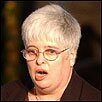
Barbara Roche MP - Cabinet Office Minister
Barbara Roche MP
Question: What exactly is the Regional Co-ordination Unit responsible for?
Barbara Roche: The Regional Co-ordination Unit was set up to be a new centre for the network of Government Offices for the Regions. The Government Offices are the key representatives of central government in the regions. And what they do is they deliver government programmes. The Regional Co-ordination Unit is the centre for that and it basically cuts through all the departmental portfolios. It is now located in the Cabinet Office.
Question: What has it achieved since you took responsibility for it in June?
Barbara Roche: The main thing is that it has increased the role of the Government Offices in the regions. We've got more government departments now channelling their functions through Government Offices. What I'm also anxious to do with it is to use it as something which is not just channelling funds, but is also helping to build capacity in the regions- so it can act as a centre for expertise. We've got various programmes that we deliver in the regions called Area Based Initiatives, and what we are trying to do is improve the delivery of them. So that is helping local authorities and local communities to help achieve those programmes.
Question: Do you believe there is a North South divide, and if so what can the government do about it?
Barbara Roche:I think that there are different issues between different regions, and I think there are different sets of problems, which have probably existed for a long time. That's why there are lots of initiatives in place: like the Neighbourhood Renewal Fund, £800 million spent over three years to look at intensive regeneration for our poorest neighbourhoods. We've also set up Action Teams in twenty communities with the highest unemployment, trying to match unemployed people to vacancies, working with the RDAs - the Regional Development Agencies - and new employment zones. All those things are in there to actually try to deal with such a divide.
Question: Some people argue that overall responsibility for the regions is rather complicated. How do you respond to that?
Barbara Roche: Well I don't accept that. As well as the Regional Co-ordination Unit, our role in the Cabinet Office is to assist with strategic policy of English Regional Government. Stephen Byers's department has responsibility for the implementation of the detailed policy and actually it works pretty well. Of course the advantage that we've got is having the Regional Co-ordination Unit in the centre of government, so that we can do all the cross cutting work across government, because we don't have the narrow departmental brief that other departments will have.
Question: The Social Exclusion Unit is looking into the issue of young runaways - what were your findings?
Barbara Roche: Well first of all there are quite a number of incidents of young runaways, and at quite a young age. I have been quite startled by it myself. By the age of 16, one in nine children will run away for at least one night, and about a quarter of them will actually sleep on the streets. I was pretty shocked when I read it! We're going to be reporting on solutions early next year.
Question: The Social Exclusion Unit has also been working on reducing re-offending from prisoners - what have you found there?
Barbara Roche: We have done a major analysis of the issue and are working on recommendations now. This is not a question for just one department alone, it's something that affects a number of departments. Clearly it's a priority for the Home Office because they've got the prison service, but it also affects other areas. For example housing, social services on what prisoners need, education - the health needs. So what's important there is focussing on boosting levels of employment but also reducing rates of homelessness. Because if you don't, then you're increasing the possibility of people re-offending again. I think the figure is that around 60 per cent of prisoners are re-convicted within two years of release, and with some groups it is even higher. So anything we can do to cut down on that has got to be good for society at large.
Question: But wouldn't that be a matter for the Home Office rather than the Cabinet Office?
Barbara Roche: Oh it's a matter for Government! You are absolutely right, the Home Office has got a major role to play on this - and they are chairing the main group. What we do is facilitate the project and the Home Office are very heavily involved in this. But we must involve other departments as well. For example, if you are talking about boosting levels of employment, that involves other government departments, if you are talking about reducing rates of homelessness, and the health of ex-prisoners, that involves other departments again. So the main thing to do is to have cross-cutting work and that's what the Social Exclusion Unit (SEU) has been able to do very successfully.
Question: The SEU has been described as an experimental project. How would you justify its continued existence?
Barbara Roche: Simply because of what it has delivered so far. If you just look at their record over a short space of time, they have covered an awful lot and they've turned it into delivery. For example, the work they've done on truancy and school exclusions, the work they've done in the reduction of teenage pregnancies - all of these areas have had a real deliverable result. The other important thing as well is the way in which the Social Exclusion Unit works. This is by involving people from outside; it goes out, it works with agencies, it will work with key players in the field. It has delivered a considerable amount so far.
Question: Do you believe that this sort of unit is a model for the government of the 21st Century?
Barbara Roche: I think it's a very good model - but I think that there are all sorts of models.
Question: And it could be extended further?
Barbara Roche: I think the whole idea of there being much more joined up work between government, the private sector, regional authorities, the voluntary sector - is very important. For instance, if you look at another unit, the Performance and Innovation Unit, that works in a very similar way with people being brought in from outside to head up a project and involves officials and people from outside. I think that's a very sensible way for governments to work.
Question: How do you tackle issues across departments?
Barbara Roche: This is one of the major challenges for government, the way in which government is constructed. If you are in individual departments, cross departmental work is difficult. However, it is essential. When you get it right it is extremely productive.
Question: And do you think horizontal government will be extended further?
Barbara Roche: I think that what you have seen from what this government has done before is that Ministers appreciate that their key priority is to deliver the government's objectives, the manifesto objectives. Certainly the whole emphasis has been on cross cutting work and cross cutting initiatives. So yes, certainly.
Question: What will be the consequences for the traditional Whitehall departmental culture?
Barbara Roche: I suppose you could argue that in a sense cross cutting work has always been there, for example work in Cabinet Committees is always cross cutting. But it is more now. A good example is the Government Offices. When people work in Government Offices, they come from a particular home department, but of course what we encourage people to do when they work in Government Offices for the regions is to think of themselves not as coming from a particular department and then having a vertical line, but to use your phrase, to work in a much more horizontal way, so that they are delivering what is good for that region.
Question: Some people argue that the Cabinet Office has become a quasi-prime minister's department. How would you respond to that?
Barbara Roche: No I don't think that's correct. What it is doing is having a proper role for the centre which is important. And it is important that you have got a Cabinet Office which is achieving the delivery aims of the government; enhancing excellence in public service, both in local government and central government, or in the regional delivery agenda.
Question: There have been criticisms over roles and responsibilities in the Cabinet Office. Are these teething problems following the recent reshuffle and subsequent reorganisation or could the Cabinet Office have better communicated its new roles and responsibilities?
Barbara Roche: I don't think so. I think we are pretty much in line. If you look at the Public Administration Select Committee in the last Parliament, they certainly believed that there ought to be a greater strategic capacity at the centre of government. In a sense that's exactly what we are doing: they wanted to have a powerful Cabinet Office Minister, and of course we now have the Office of the Deputy Prime Minister working closely with the Prime Minister's office.
Question: Would you rule out a Prime Minister's department in the future?
Barbara Roche: It's not the way it works. What you've got is a strong Deputy Prime Minister's office and No.10 working together in order to achieve the delivery objectives. And you've got a strengthened centre, and I think that actually makes a great deal of sense. And it's in line with the recommendations that the Public Administration Select Committee wanted to see.
Question: Following Jo Moore's email suggesting that civil servants bury bad news after the September 11 terrorist attacks - how would you have dealt with her if she had worked for you?
Barbara Roche: The Prime Minister said what he said last week and I support exactly what he said.
|