|
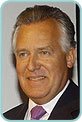
Peter Hain MP, Europe Minister
Peter Hain
Question: You've got the European Communities (Amendment) bill which ratifies the Treaty of Nice. What exactly do we get with the Nice Treaty?
Peter Hain: We get a number of key benefits for Britain. Increased voting power in the Council of Ministers, so Britain's weight will be much stronger. We get reform of cumbersome and bureaucratic procedures in the European Union's decision making structure, which means it's easier to get decisions beneficial to Britain, for example appointments of Judges and other key officials which could be log-jammed otherwise.
And of course, we get the fantastic opportunity of enlargement; which will add an estimated £1.75billion a year to UK GDP in extra trading opportunities, along with 300,000 jobs across the EU by enlarging the single market from its present size from around 370 million to over 500 million. And I think for Britain too, there's the fantastic prize of healing the wounds of the Second World War and the Cold War; of reuniting Europe. That's what enlargement is about, it's about bringing Europe back together again. Bringing countries like Poland and Hungary and Cyprus - friends of ours, back in under the European umbrella. That increases stability, increases security, increases peace, so it's a win-win - increased jobs, increased prosperity for British companies and citizens and increased security for everybody in Britain.
Question: So why did the Irish reject it?
Peter Hain: Well the Irish government are reporting back to us, making their own assessment. There are a number of specific issues involved in the referendum campaign, including Ireland's neutrality - it's not a member of NATO and there seemed to be an impression that Nice was about bringing Ireland in under a common European army, which is not the case. But that's a matter really to be clarified. We respect the decisions of the Irish people:they voted in a referendum. Nice can't proceed, the treaty can't proceed without unanimous agreement from all 15 Member States, Britain included. The Irish governmentwill have time for reflection to see whether any assistance can be given to them to enable Ireland to ratify the treaty. But I would take their advice meanwhile that we proceed with our own ratification along with the other 13 member states to make sure that we get the enlargement show on the road, because it's a fantastic prize for all of us.
Question: So what's at stake if Nice fails to get ratified?
Peter Hain: Well the Czech Republic won't come into to the EU, Cyprus won't come in, Malta won't come in, Poland won't come in, Hungary won't come in. The 12 states will be left beached outside the EU:they're desperate to come in - it's good for our stability and our prosperity that they do so.
Question: Are you confident that the Irish will change their minds?
Peter Hain: Well it's not for me to comment on what the Irish should do. I don't believe that Irish citizens, not withstanding the genuine concerns they expressed in the referendum, want to see Europe's enlargement stopped. I think they have other concerns.
Question: What would be the big issues during the Belgian Presidency of the EU?
Peter Hain: We want to see economic reform pushed forward. Europe is not competitive enough. Energy liberalisation, for instance, gas and electricity, must be given a priority. That was set in train at the Lisbon summit which was a great victory for Britain and British foreign policy - for this government's economic reform agenda.
But the Stockholm summit earlier this year seemed to put a bit of a brake on it, and that's crucial because energy prices across Europe are far too high, there is a kind of cartel that fixes it and its not competitive. And we've seen the benefits here in Britain of electricity and gas prices coming down, something like 20 per cent which has benefited householders and companies. And we want to see the whole of Europe get those benefits. It's important for us that it does because we, through the interconnector between Belgium and Britain, have effectively been importing high wholesale gas prices into Britain through that interconnector. It was originally constructed for security and supply reasons but has now been a conduit for importing high prices. So energy liberalisation will help deal with that problem.
Question: Who's holding the process up?
Peter Hain: Well, Germany and France have expressed major reservations about it and we are trying to address those, because it's important that they are overcome. But I do give a very clear message to French companies like EDF and German companies like E.ON. The French company EDF is effectively state controlled and owned. They are able to come into the British market and bid for Seeboard, or London Electricity, or in E.ON's case Powergen. But British companies like Centrica and others are not able to go into France and Germany and form joint ventures, joint partnerships and make acquisitions. Now that's unfair. There's no reciprocity and I don't think it's acceptable for Germany and France to hold up energy liberalisation or block it and think that their companies can have a free ride into the British market.
Question: So that's a priority for you? Peter Hain: Yes it is, and I've already had discussions with the Belgian energy minister and indeed the Belgian government generally about that.
Question: Belgians say they want to increase respect for human rights in EU foreign and security policy. What affect will this have on the UK?
Peter Hain: We support that. We've been a champion of human rights across the world; look at the way we intervened and lead the way to save the people of Kosovo from ethnic cleansing and genocide. And I think you can see it, for example, in the very close cooperation between Britain and Belgium in seeking to block conflict diamonds: diamonds from war zones like Sierra Leone and Angola which are feeding the wars there, threatening British soldiers in the case of Sierra Leone. Because these diamonds are used to purchase arms, often from Eastern European countries like Bulgaria and the Ukraine which are candidates for accession to the EU. And I think Belgium and us stand shoulder to shoulder in tackling that problem and making sure that the diamonds that come into Antwerp or London are clean diamonds and we want to see European legislation and an international agreement to achieve that. That's a very concrete example of championing human rights.
Question: Belgium is also keen to push through agreement on climate change. However the US oppose Kyoto Treaty so how does the EU get over the obstacle of the US?
Peter Hain: We proceed to make our position absolutely clear as we did to President Bush in Gothenburg that we stand full square behind the Kyoto treaty. We hope that the USA will accede to it in time and we hope that everybody will understand that you can't opt out. Nobody in the world can opt out of the environmental catastrophe that faces us unless we deal with the problems of emissions and pollution threatening the world. The USA can't opt out of that.
Question: Are you open to compromises with the US?
Peter Hain: Well obviously if we can find a way in which the US can accede to the treaty, without renegotiating the treaty and without altering its fundamentals, then fine. But meanwhile we'll seek to get other states to sign up to it or to ratify it, so we get a majority necessary to bring it into force.
Question: But what's at stake if you fail to broker a deal with the US?
Peter Hain: Well, I think because you can't do everything doesn't mean that you ought to do nothing. Because one country in the world, a critically important country with five per cent of the population (albeit responsible for a quarter of the world's emissions), chooses not to come along with it, doesn't mean to say that the rest of the 95 per cent of the world's population shouldn't.
Question: Were you surprised when Tony Blair asked you to take this post?
Peter Hain: I was thrilled. I've very much enjoyed the previous jobs I've done in government, but this is - to come back to the Foreign Office is for me a particular joy, because I enjoy working here. But to be also involved in European policy which has such a critical domestic resonance - it's a unique job in that sense in the Foreign Office. Much as I enjoyed my previous jobs covering Africa, and the Middle East and South Asia here in the Foreign Office, they didn't impinge upon domestic politics, and votes and general elections in the way that Europe does. So I was privileged to be asked.
Question: Newspapers describe you as Labour's most Euro-cautious minister - the others were previously described as euro-fanatics?
Peter Hain: I don't accept the labels that the media attach to the protagonists in the European debate. I'm not a Euro-sceptic, neither am I a Euro-fanatic - I am a practical European. I want Britain to be in the heart of Europe because it brings practical benefits to us in terms of our prosperity, our job opportunities, the increased trade that British companies can get, and our security. And you know, I think it's a practical benefit that Britons can holiday in Europe and take advantage of the local health services free of charge. It's a practical benefit that British companies can trade on the single market - 370 million people - a fantastic opportunity there. It's a practical benefit that we can enjoy the security and the strength of banding together with 14 other member states. So I'm a practical European, not a fanatical European and nor a sceptical European.
Question: Do you think if there was a referendum today the British public would opt for the Euro?
Peter Hain: I don't want to have the Euro today.
Question: And the British public wouldn't either?
Peter Hain: I don't think it would be right for Britain to enter the single currency today.
Question: Why?
Peter Hain: Because we need to have sufficient economic convergence, we need to meet the five tests the Chancellor has set, affecting: jobs, investment, financial services, economic convergence and flexibility. And although I believe that the single currency could be an enormous benefit to Britain in principle, in practice those five tests have to be met. Because this is not a matter of vision and an academic matter: it's got to be good for British jobs, for British mortgages and British stability. If and when it is, then the Chancellor will have made his assessment and we will make a recommendation on a referendum, not before that.
Question: But surely there are political considerations too?
Peter Hain: Of course there are political considerations.
Question: Do they come after the economic ones?
Peter Hain: The economic considerations are at the heart of it. Why do I not want to join today, and why are we not recommending a yes vote in the referendum today? Because the conditions aren't right. We are taking a very cautious, careful, practical approach to this and I think that's what people want. They don't want some fanatical, visionary grand design, they want to know that it's going to be good for them and good for Britain. And that's why I think the Tories' position of ruling it out is so damaging. The Euro fanatics who want to rush in are wrong, and the Tories who want to say don't ever do it are wrong. We could be left behind. Britain could suffer by being outside the world's second biggest currency alongside the dollar. By ruling it out, saying we should be left outside forever, could be very damaging to Britain.
Question: Do you think that the Euro could be a good idea in principle?
Peter Hain: The government said, Tony Blair said, Gordon Brown said, in principle we're in favour but in practice it depends on being in Britain's economic interests. And we'll make that assessment as a government following the Chancellor's recommendations very cautiously, very responsibly and ensure that it is in Britain's interests. Otherwise we won't proceed.
Question: You say that you are a practical European - does your vision of Europe differ from your predecessors?
Peter Hain: The government's vision of Europe, my vision of Europe, is I want Britain to be at the heart of Europe, not as the Tories relegated us to the sidelines of Europe. I want us to be able to influence things in Britain's interests and I want Britain to be able to enjoy the camaraderie and the influence that comes from being in a wider alliance. You know, we are members of the United Nations, we gain a lot from that. We are members of NATO - we gain a lot from that in terms of our joining together for all purposes of defence. We gain a lot from the European Union in terms of our economic opportunities as we have already done so. 3.5 million jobs are linked to our membership of the EU. That's my policy and that's the government's policy. We want Europe to be brought closer to its people and we want economic reform in Europe.
Question: Some people argue that Europe suffers from a democratic deficit. How would you propose to fix this deficit?
Peter Hain: Tony Blair has put forward a series of proposals which we will now take forward in the debate which is going to begin around the Laeken summit in the Belgian presidency in December about the future of Europe to close the undoubted gap, illustrated for instance in the Irish referendum, between the populace of Europe and the rulers of Europe. Europe has achieved an enormous amount - never forget that. It's rescued the people of Europe from war-torn division and conflict and joined us together as a people of independent nation states in a prosperous peaceful future. That's a fantastic achievement. Wars have been fought across Europe for centuries. We haven't had one in the last half century in Western Europe. Our task now is to enlarge and reunite Europe so that we extend that peace and stability eastwards and therefore make Europe a safer place and the World a safer place.
Question: On the domestic front. You've returned to power on a second landslide. The Opposition is otherwise occupied with leadership issues. Some people argue that the Government isn't receiving enough scrutiny. So do you expect to see more assertive Labour backbenchers?
Peter Hain: I'm accountable as a government minister. I answer questions in Parliament, I am taking a bill through Parliament: the Nice Treaty Bill. I am constantly accountable to Parliament. I constantly meet backbench MPs who put to me their concerns and their objectives. I think this idea that despite a big majority we're not accountable is fanciful. We're extremely accountable. We are accountable on the "Today" programme just about every other morning, we are accountable through interviews like this.
I think we are in a very interesting phase in British politics. I think people want less of the 'yah boo' antagonism that we saw from the Tories in the last general election and the entire period of the last opposition - which actually meant they weren't an effective Opposition. People don't want politicians slinging mud at one another and resorting to spin and slogans; they want genuine honest debate and where there are differences, a clash of those differences. We haven't really had that. In the last Parliament we had a demoralised, ranting, irrelevant Tory opposition. In this Parliament, I hope that we will see unfolding a new political era, a new type of politics in which the centre and the centre-left predominates which is where I think the instincts of the British people are - an era in which the ranting right-wing Conservatism that did so much damage to Britain and has been so useless in Opposition for the last four years is consigned to the margins. And I hope the Tory party will become more serious and contribute a debate instead of just screaming slogans. I think that the Liberal Democrats are more influential -they are a far more serious part of the opposition than the Tories are at the moment. We'll see how the Tory leadership unfolds but that's how the Tories are at the moment.
Question: What sort of leader would best take the Conservative party forward to the kind of Opposition you are talking about?
Peter Hain: That's their problem!
|