|
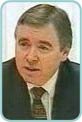
Ieuan Wyn Jones MP, AM, Leader of Plaid Cymru
Ieuan Wyn Jones
Question: When you were campaigning for the leadership of Plaid Cymru, you highlighted three key themes. So looking at one of these themes- greater clarity on constitutional objectives. You said your immediate objective was securing the same powers as the Scottish parliament for the Welsh Assembly. But after that full nation status within the EU, what exactly does that mean?
Ieuan Wyn Jones: What we've done is actually taken a long hard look at our constitutional objectives. We have introduced a consultation exercise with all our party members to try to see how we could set them in a more modern context. The current stated aim in our constitution is self-government within the European Union and we recognise the need for greater clarity to define what that means in practical terms. We are looking at what is currently happening in Europe, and the changes that have taken place since we adopted the phrase self government in Europe. Europe could go in a number of directions. Our preferred option would be for Europe to become a Europe of the regions, with greater powers at a regional level and a reduction in the powers of the member states. On the other hand, we could still find ourselves in a position whereby the member states carry the same clout as they do today, and we need to keep our options open.
Question: So you are going into an election not having a clear end objective?
Ieuan Wyn Jones: It's important to remember that in the manifesto for this election what we are talking about is achieving for Wales the same as the Scottish parliament. So anything beyond that is some years down the line anyway. I made it clear when I became Party Leader in August, that it was an impossible task to have concluded all the work on our longer-term objectives by the general election. As the timing of the general election was not in our hands, we had to launch our consultation exercise irrespective of when the election would be called. One of the things that I particularly didn't want to do was to just have a quick fix for the election. I would much prefer to think it thought through properly so that by the time the assembly election in 2003 come around there is absolute clarity on where we stand.
Question: How do these constitutional options effect Wales's relationship with the Westminster parliament?
Ieuan Wyn Jones: The current relationship is unsatisfactory. Early on in the legislative process there ought to be discussions between the Cabinet in the Assembly and the Cabinet in Westminster about what Wales should need in terms of its legislative programme. I would of course prefer that the National Assembly would have its own legislative powers. But in the absence of that there needs to be much greater linkage between what we want in the Assembly as a legislative framework with what happens in Westminster.
This year there was one bill that came from the National Assembly - which was the Children's Commissioner for Wales. But there are five other bills where there is what we would call a Welsh interest. We would have preferred there to have been many more Bills which would be exclusive to Wales that we then could have promoted through Westminster, through the legislative programme in Westminster. We have advocated a fast track procedure whereby second readings of Welsh Bills should go direct to the Welsh Grand Committee and then only the detailed scrutiny should go to Standing Committee. Then we wouldn't be involved in this awful logjam of Westminster, of having to queue for time for Bills.
The other of course is the monitoring of progress of Bills as they go through parliament. I am not sure that there is sufficient consultation between Whitehall and the Assembly as the Bills go through, as they are being amended and taking on board amendments which have been proposed by the Assembly. So in terms of legislation I think a great deal could be done to make it easier.
The other area is the actual day to day link between officials. A typical example currently of course is the foot and mouth disease, where some issues have been dealt with in the Assembly and some issues have to be dealt with jointly between MAFF and the National Assembly. I think we need to look at how these relationships are working to make sure that what happens in the National Assembly and the views of the National Assembly are taken into account by officials in Whitehall. Those relations are improving but there is still a long way to go.
Question: One area that vexes the Conservatives and I wonder whether it vexes you is the issue of the West Lothian question, in terms of a Labour Government being able to use Scottish Labour MPs to put through measures effecting England and Wales, through the Westminster parliament. Does that worry you?
Ieuan Wyn Jones: It doesn't worry us specifically in Wales because legislation affecting England and Wales is still at Westminster at present. It would only become an issue if the Assembly also had legislative powers. You would have Welsh MPs for example voting on matters which are specifically reserved to England and Scottish MPs doing the same, but English MPs can neither vote on matters affecting Scotland or Wales if the Assembly had legislative powers.
The West Lothian question can only be satisfactorily resolved when legislative devolution has been delivered in all parts of the United Kingdom. The Conservatives should accept this and present their own proposals for taking the devolution process forward.
Question: There has been rumours that that there is going to be a Secretary of State for the Isles. Would you support such a move?
Ieuan Wyn Jones: There is no long term future for separate Secretaries of State for Scotland and Northern Ireland, bearing in mind that most of the functions are now transferred over to the regional bodies. Whilst the assembly does not have legislative powers there is a clear case for retaining the Secretary of Wales. Once the Assembly has legislative powers then the case weakens considerably.
Question: You said devolution is here to stay, so how could you raise the Welsh public's confidence in the Welsh Assembly?
Ieuan Wyn Jones: It is a new institution. And it does take time for the Assembly itself to function properly. The problem though with the Assembly is that it has extremely weak powers and people's expectations of what it could deliver in the early days were extremely high. If you recognise that people generally don't love political institutions and that people's expectations were high, and that there has been a lack of clarity about its powers, then it is hardly surprising that it isn't higher in public esteem. Clearly, political institutions can only work if people think that they can do positive things to change their lives in a positive way. They haven't been convinced yet that the Assembly can do that.
Question: Do you think the Welsh public want the assembly to have tax raising powers?
Ieuan Wyn Jones: It does need tax raising powers because you can't really have responsibility for spending public money unless you also have the responsibility for raising those funds. All levels of government have some form of tax raising powers, even the Parish Council. The Assembly is about the only government body that doesn't.
Question: You said that the Monarchy needs to adapt to changing circumstances. What exactly did you mean by that?
Ieuan Wyn Jones: There are two issues really. The first is that I have a fundamental objection to the view that we are all subjects. We should all be citizens and sovereignty should come from the bottom up and not from the top down. So that needs to change and I think the Monarchy would have to accept that in a modern constitutional setting that that would be the case.
The second thing is I think that people also want to see a modern Monarchy, which doesn't have the aura of being old fashioned and stuffy. It should be a slimmed down Monarchy with its powers clearly defined and its responsibilities clearly defined and that it accepts that people are citizens and not subjects. If the Monarchy were to adapt in that way, then I think it would be far more acceptable to the majority of people.
Question: Talking of that ceremonial focus. Do you think the post of Prince of Wales and Duke of Edinburgh are pointless postings in this slimmed down Monarchy that you would like, and that we should just have a Queen?
Ieuan Wyn Jones: We need a debate on this since the role of the Prince of Wales in a devolved Wales is no longer clear. I think that is an important issue.
Question: But what would you like the role of the Prince of Wales in a devolved Wales to be?
Ieuan Wyn Jones: I have no firm views about that. It is something that I am entirely relaxed about.
Question: You have also said that admire the Prince of Wales, for his excellent policy on ideas. Would you ever consider campaigning on some of these ideas, in areas such as the environment?
Ieuan Wyn Jones: I think that we already have policies which are closer to his views on the environment than the current government do. For example we have always been extremely keen on organic farming and Simon Thomas, one of our MPs here, has indeed promoted a Bill that would increase the quotient of organic farming. He has also very firm views on genetically modified crops that we would support.
Question: You claim that Wales is getting £600 million less spent on education per head than is spent in England, and you claim that is a consequence of the Barnett Formula, so what is your solution to the anomalies of the Barnett Frmula?
Ieuan Wyn Jones: It is not quite so much the anomalies of the Barnett Formula. There are two issues here. The first is that the Barnett formula itself needs to be reformed and that will effect not only spending on education but on health and all the other issues that have been devolved to the National Assembly. We want the Barnett formula to be replaced by a formula that is not based on a straight population fall, but is based on actual need. The National Assembly's budget would be increased quite substantially in that event.
The second issue is that of European funding. This must be truly additional to the block grant if Wales is to benefit fully from it. Otherwise spending on European projects will be at the expense of money allocated for essential public services such as education or health. In the Comprehensive Spending Review last July, Wales did not get the full amount of extra money over and above the block grant to cover European Structural Funds to which we are entitled. Moreover, money for matching funds will also have to come from within the block grant. As a result, our education budget has been particularly badly hit, where spending per pupil is already less than in England. The gap is set to widen over the next three years.
Question: Looking back on your Leadership campaign you also wanted greater clarity on policy issues. You wanted to conduct an audit of policies. So what did this audit uncover?
Ieuan Wyn Jones: It is a process that we are going through at the moment. We haven't completed it because obviously a number of the policies that I am referring to are policies that we would want to implement in the National Assembly after the 2003 election. But the principal reason I wanted to have the audit was that I specifically wanted the party to be committed to the principle of redistribution of wealth. This was not only in terms of money, in terms of improving people's standard of living, but also making sure that for example education spending was more fairly distributed between the areas which are affluent and the areas that are poorer. Likewise, we need to make sure that health spending is more equally distributed between areas where ill health is much higher than in others. For example some of the valley communities and some of the rural communities have high incidences of ill health and we need to tackle those.
I want all our policies to take the principle of redistribution of wealth on board - in economic development, health and education and also in transport. Many communities are unable to develop fully either economically or socially because of lack of transport facilities. And we are currently in the process of going through every one of those to make sure that they meet that priority.
Question: I know it is not finished, but any changes so far, any big policy changes?
Ieuan Wyn Jones: Not so far, but the two key areas that we are looking at presently are education and health. Firstly, in education we want to take out of the education field those elements of competition that were introduced by the Conservatives, and pursued by Labour. And we are working hard on having a much fairer distribution system. The second area is health, where we try to allocate the resources specifically to deal with major problems such as for example, there is a very high incidence of heart disease and strokes in Wales, we don't have facilities to deal with either properly.
Question: Looking to the Westminster election. How many seats do you realistically hope to win?
Ieuan Wyn Jones: More than we currently have. It is not very helpful to talk in terms of the exact number of seats or in terms of the exact percentage of the vote that we expect to get. What we are using for the Westminster election is the 1997 election as a benchmark. At the forthcoming Westminster election we want to improve on our 1997 general election result which would mean in a sense having more seats here but also and equally important in my view, pushing up our share of the vote in Wales.
Question: Another area that you talked about in your leadership campaign - restructuring the party, how has this progressed?
Ieuan Wyn Jones: This is moving ahead. One of the things I was very keen on was to have collective leadership within the party because it has grown so much since 1999. We now have a parliamentary party, we have an Assembly party, we have a European party, we control three local authorities, and we share power in others. As it is a much bigger party it is simply impossible for one person to be running the whole show. So, I have been looking at ways in which we can restructure by sharing responsibility within the party leadership. There is going to be a new post created - a deputy with some of the responsibility for co-ordinating the levels that we have and for campaigning, which would then leave me free to concentrate on the political strategic issues which I think the leader should do.
Question: When is this Deputy going to be elected, is it an elected post?
Ieuan Wyn Jones: It will be an elected post and if it is accepted by the party, it will be put to a constitutional conference later this year and then it will be elected probably in 2002.
Question: Labour has attacked your party, your attitude to English people who move to Wales, buy a home in Wales. What exactly is your position on English people moving to Wales, or to buy a house or a cottage in Wales. Are they welcome?
Ieuan Wyn Jones: Of course they are welcome. And I understand why the Labour party want to try and attack us on this because they see their grip on power in Wales being eroded and we are the main challengers to them. But the reality is that within our party constitution we value people whatever their background, wherever they come from, whatever their culture, and whatever language they speak, be it Welsh, English or any other minority languages. So it's absolutely wrong to say that we discriminate against anybody. We positively welcome people and anybody who lives in Wales, and this comes back to my original point about citizenship. I am very interested in promoting the concept of positive citizenship - a citizenship that isn't based on ethnic background, but actually where you live and where you make a contribution to society.
Question: So if someone comes up to you and says "I am voting for your party in the next election because I hate the English and I want them out of Wales" What would you say?
Ieuan Wyn Jones: They wouldn't be welcome in the party.
Question: Their vote is not welcome?
Ieuan Wyn Jones: No.
Question: Speaking on the BBC's Room 101, TV presenter Anne Robinson claimed the Welsh are irritating, she said "What are they for?", and that they "are always so pleased with themselves". Do you believe her comments were racist?
Ieuan Wyn Jones: One has to be careful before using the word racist, because it is a highly emotive word. I also think that you have to recognise that obviously humour has a place on BBC programmes. But I think that Anne Robinson went over the boundary of what was acceptable and certainly if she had used those phrases against other minorities in Britain, then she would have been branded a racist. And I think that her comments have to be condemned in that light. But I think that also one can't be too sensitive about this issue and as a modern self-confident nation, we should from time to time accept people might want to make humorous comments about the Welsh or other groups in Britain. On this particular instance, however, I think she went over the boundary of what is acceptable.
Question: So on the wider question, why do you think it is acceptable to insult the Welsh, whereas it wouldn't be acceptable to insult Blacks or Asians?
Ieuan Wyn Jones: Had she said those comments about people from ethnic minorities, that wouldn't have been acceptable, so it wasn't acceptable in the context of saying things about the Welsh. That is why I said that the comments were unacceptable.
|