|
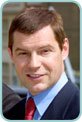
Nigel Griffiths MP
Nigel Griffiths MP
Question: Following on from devolution in Scotland and Wales do you think the constitutional balance is tipped in favour of Scotland and Wales at the expense of England? Nigel Griffiths: No and for one simple reason and that is that we have to wait and see how devolution beds down. It's only been working for just over a year. You wouldn't take a judgement on a child's potential at a year and a half, you would want to see how that child is growing and what potential and skills and inclinations it had.
In any democracy which has gone down the route of devolution, such as Spain, or one might look to the United States of America, they were not quick to judge about how the federal structure should relate to the local structure. That is not to say in the future if Parliament and the English people and more importantly if the regions of England choose to go down a devolution route as London has started then the relationship won't be constantly re-evaluated but those who say we should treat the Scottish devolution structure as written in stone and therefore start legislating for differences between the status of members of parliament I think are being foolish and premature. They didn't do it in Northern Ireland and the reason they didn't do it in Northern Ireland was because they saw the Northern Ireland Unionists I fear as being supportive of the British Conservatives. So the Northern Ireland Unionists are told don't bother coming over here and talk about English and Scottish and Welsh matters. Having had various forms of devolution tried in Northern Ireland over many decades, people are so quick to judge what's happened in Scotland and Wales one and a half years on and many of them started doing it a lot sooner than that.
Question: In the long term would you rule out the possibility of measures such as reducing the number of Scottish MPs in Westminster?
Nigel Griffiths: I don't rule that out in the short term. My view is very straight-forward and that is the number of urban MPs in Scotland should be the equivalent of the number of urban MPs in England.
If you look at the rural situation, the biggest seats in Scotland like Inverness East Nairn and Lochaber, 1,500 square miles. The biggest seat in England is half that and the next biggest seats in England are a third of that size. The biggest seat in England has got an electorate of 58,000 and the biggest seat in Scotland has got an electorate of 67,000. So in England they recognise there are vast sprawling rural areas towards the borders that an MP cannot cover, therefore they go for 58,000-60,000 people just as of course in the Highlands and Islands there are small electorates too.
This brings me on to my next point which is that there is a view that people feel increasingly detached from politics. If you expect somebody like David Stewart, the MP for Inverness, to cover Inverness and the north sea down to Glencoe and out into the Atlantic - a vast area, and you expect people to keep in touch with that MP then if you go down the route of equalising seat sizes you are in danger of adding another 500 square miles on to that 1,500 and people feeling they're even more remote and further away.
The same case goes with spending. If you want to keep a populated north of Scotland or rural parts of England and Wales you have to spend more per head on schooling and on roads because quite frankly you've got to clear away the snow, you've got to educate people - if you build a school sixty miles away from pupils then you have to spend money getting them there so you don't save money. It's an issue that requires a bit more thought than a knee jerk reaction throughout the United Kingdom.
Question: So the reaction to changing the Barnett formula is not thought through?
Nigel Griffiths: Absolutely. Of course the Barnett formula has got to be re-evaluated and re-analysed but that's got to be done taking an assessment of whether you're going to encourage people to live in Inverness or more remote villages and the same in England in terms of funding, but the Government in England skew funding to areas where you need more per head of the population.
Now the old way of doing that was to say, urban area, large slum clearance problem you give a lot more to them - rural area long distances to travel, small schools give more resources to them - that's a crude formula that applied, but as urban poverty, and especially housing poverty is being tackled and has wiped out some of those notorious slums and wiping some of the terrible new slums that replaced the old slums, then central government has always got to have that dialogue with local government as to whether the resources should be going into the same areas and the answer is no.
One of the issues that does concern me is that it is easy for me as a city MP to cover an area five miles square, to make sure that I keep in touch. There's no excuse for me not to keep in touch with community groups and electors. I do frequent visits to them. I even put it in my paper, if you're a senior citizen or you just can't make it to see me I'll call and see you. That is ten minutes out of my way. For David Stewart and for John Major in Huntingdon and others that is impractical. The problem is whereas an elector in Edinburgh South can feel that I can give them a great response but maybe an elector in Huntingdon doesn't feel that John Major can give them a great response because he can't jump in his car drive on a two hour round trip, but I think people are more reasonable than that.
There is a balance between engaging people and that is where critical mass size of constituencies is not unimportant as well as how we look at new technology. When I was first elected twenty years ago as a young councillor I never asked my constituents for their phone numbers as half my constituents in a very deprived council housing estate didn't have phones now we always ask my constituents for their phone numbers and we frequently now get mobile phone numbers.
So communication is becoming easier at the same time as people are feeling more detached from the process and that's a paradox and that's why we need to do what the Scottish Parliament is trying to do and that is engage people through new mechanisms like petitions. In the Scottish Parliament you can petition the parliament as an individual and there's a committee that goes through these petitions and screens out the frivolous or barmy from the serious. The screening process considers the frivolous and barmy and they are entitled to be considered.
Question: So do you believe the internet is going to be a way of connecting people to politics?
Nigel Griffiths: I believe digital TV will beat the internet. I remember again as a young councillor when Sky satellite TV took off it took off in the area I represented more than many. Why was it so popular in a low income area - because if you had a young family the weekly subscription for Sky cost the same as taking your family to the cinema, if you included bus fares and tickets. So you got a whole week's entertainment for the price of two hours. So I'm not disparaging about how poor people can afford satellite TV, I never was, I always saw it as a cheap way of bringing entertainment to all of us. I'm not a knocker of Sky.
It so happens I believe that digital TV will start performing that function. In just a few years the number of people using digital TV where they can sit in front of their TV in their living rooms and have access to the internet will steadily increase. The internet is going to play a great part but it will be done through digital TV.
Question: How will politicians use digital TV to connect to the voters?
Nigel Griffiths: People like me are increasingly getting constituents e-mailing us about issues, now normally when people write to me about an issue - Jubilee 2000 is an example of this - the first thing I do is alert them to the fact that I helped found Scottish Education Action Development in 1979 with Mark Lazaravich and with Alan Sinclair and Alistair Grimes and this was an NGO in Edinburgh promoting education in the third world running very strong today - and when there are new developments I mail the people with these new developments - I've started doing that by e-mail, so basically as constituents want to raise issues with me email is making it very easy for me to say to them, look if you want to be kept up to date with what I'm doing, if I'm speaking in the House of Commons I can do that at a press of a few buttons. A lot easier than typing up the letter, getting the envelope mailed and put in the post. It's generating work at the moment because we have to do the spadework in any case for the people who are not on email which is the vast majority.
Question: The Conservatives would say the Scottish Parliament decides certain health and education issues relating to Scotland so why should you as an MP for a Scottish constituency vote on health and education issues specially relating to England?
Nigel Griffiths: Let's look at the big PFI hospital being built in my constituency. £180 to £200 million worth of development on PFI. If that goes badly wrong or starts going badly wrong I think my English colleagues will want in any health debate on English matters, me to stand up in the House and point out what the pitfalls are.
I'll give you another example, when we were discussing the absolute right to jury trial in England, one of my colleagues, who is a lawyer, got up and said, this is a good debate I know it's about English matters, can I tell Honourable Members and especially Honourable Members who object to Jack Straw's change that there hasn't in living memory been a right to jury trial in Scotland that the ethnic minority groups in Glasgow and Edinburgh don't complain to me that that causes grave injustice to their members. I phoned the Scots Law journal and asked the editor if in the past 20 years there had been any articles or letters complaining about the non-right to jury trial in Scotland and whether certain prominent Members of the House of Lords who are lawyers in Scotland and England ever raised this as an attack on civil rights even though they were raising it now in England and he said no.
Question: That's fine as a right to advise but why then a right to vote?
Nigel Griffiths: Well, on something like jury trials, I hope I am helping colleagues throughout the United Kingdom avoid the pitfalls of something like the poll tax. This however is not written in stone and there is another dimension here.
I have an involvement in politics, and that now goes back 30 years although it might not seem it, but my first campaign was in the early to mid 70s supporting devolution in Scotland, and there was a rising tide of nationalism, the Scottish nationalists had 11 MPs who were controlling a large number of councils and people frankly felt very detached from parliament down here. If anything although it wasn't reflected in the number of Scottish nationalist MPs it was certainly reflected in the opinion polls and local polling where they were getting up to 30% of the vote in the Thatcher '80s there was an even more intense feeling of detachment. But throughout that period although three quarters of people in Scotland supported a change from the status quo there was never a majority who supported separation and nor is there today and devolution if anything has diffused the demand that Scotland go it alone.
If you start saying, right, we are going to detach Scotland, we're going to stop Scottish MPs playing a part in much of United Kingdom discussion and debate then I think that will fuel the argument for a separate Scotland, which I think would be very detrimental to Scotland in particular and detrimental to England, Wales and Northern Ireland as well.
Question: Well lets look at a concrete example, fox hunting legislation going through the Scottish parliament. The SNP are considering whether they as Scottish MPs should act on legislation in Westminster, which makes fox hunting a criminal offence in England and Wales. What do you think?
Nigel Griffiths: I think that's humbug. The SNP voting record down here is very poor and I don't think they are sitting up in Scotland saying should we go down to Parliament in London and vote on this issue or that issue. Their voting pattern is so sporadic that they clearly don't have a policy for voting. But of course the Scottish Nationalists want a separate Scotland and their views are designed to try and detach Scotland from the United Kingdom.
So they would argue of course that on as many issues as possible our Scottish Members of Parliament should separate from the UK parliament, but that is not the case that's for instance advanced by any of the parties, as far as I am aware, in Northern Ireland, that they should come across and take part in the Parliament.
Question: Do you think that the Conservatives policy then saying that Scottish MPs shouldn't vote on any English matters is fuelling nationalism in Scotland?
Nigel Griffiths: I do believe that. I have no criticism of them raising it as an issue for discussion and debate, but I do criticise them looking at a one and a half year parliament in Scotland and the assembly in Wales and saying, ah well we should write the final script now and hasten the departure from Scotland and probably Wales to follow from a United Kingdom.
Question: The first general election after devolution. What do you think will be the big issues in Scotland?
Nigel Griffiths: The big issues in Scotland will be the same as the big issues in England. The eradication of child and pensioner poverty, and there is an emphasis in particular on pensioner poverty in Scotland, not that there's not pensioner poverty in England and Wales but the climate is so much harder the further north you go and therefore there is a particular need to address that. I think the Scottish Parliament has come up with a solution and that is every single senior citizen in Scotland, within five years, will have central heating, £2,500 worth paid for by the Scottish Parliament. A tremendous advance and a great step forward for eliminating that harsh pensioner choice between heating and eating which the £200 fuel allowance goes some way to addressing. So that's one issue.
I think engaging people and particularly people in more diverse rural constituencies in the democratic process are going to be fundamental and the development of what I said the Scottish Parliament has started off and that is consultative democracy, at which they've started on petitions, the ability of people to engage in the process.
What has been done with pre-legislative scrutiny in Scotland I think can be expanded in the Westminster Parliament to engage people a lot more in the process of formulating how a Bill will become an Act. Ensuring people have an input before its written in stone rather than after. I think the days of standing committees on Bills are now numbered. I've always considered standing committees on Bills were largely a waste of time. The number of amendments any government accepts are few and far between and the motives for putting forward the amendments generally narrow party political wrecking ones.
Question: So you would be calling for greater discussion and involvement with the public at the pre-legislative stage?
Nigel Griffiths: I think our select committee system provides a rough foundation for the consideration of how you would go forward with this idea. At the moment for instance on the Finance Bill, you take five six weeks, a number of sessions. If the opposition doesn't take up all those sessions and takes up only half of them, the government will chide the opposition and say this Bill is the most satisfactory in history because it's had the shortest time and the least number of amendments from the opposition, so the opposition are scrambling to statistically make sure they've tabled more amendments. We did it, they did it, it's absolutely silly. Amendments are scrambled from the CBI or the TUC or the Institute of Directors saying how the Finance Bill is going to penalise businesses, etc. and some Conservative backbencher is given a script and told to keep the Committee going for two hours on a subject he or she knows very little about, as we didn't know anything about it.
Instead we could have a public hearing where the CBI comes in and says let me tell you Members of Parliament why I think the Bill could be improved if you drop this or modify this. If you are not going to drop it could you modify it and then the Members of Parliament could say to the CBI you said this in your amendments last year and the minimum wage hasn't had that impact and then the head of the CBI could say that's because it was brought in at the right level, etc. So in other words, you have a dialogue similar to but perhaps slightly more constructive, of the PAC - which I'm on, similar to select committees - only with a more constructive dialogue. I think committees on a Bill could have that effect. The way to do it would be to have a pre-legislative scrutiny with those sorts of hearings to give people the chance. If ordinary members of the public submitted their views they could be noted and in some cases you could have a member of the public who has a lifetime's experience or expertise in an area and wants to advise the committee on it at the Bill's stage.
Question: Is this something you think the Government would consider?
Nigel Griffiths: I hope so. I believe that in the next Blair government, with the blessing of the electorate, the modernisation of the structures of government have got to proceed at a faster pace than previously although a good start has been made.
Question: Back to the general election in Scotland - is your biggest threat the SNP?
Nigel Griffiths: No the biggest threat is apathy. The biggest threat is the feeling people will have that Labour will walk it so I don't have to vote even though I'm a Labour supporter, or quite simply, I'm a Conservative voter but I'm not going to vote because there's no point in voting, which is equally dangerous. That is why I'm in favour of making it as easy as possible for people to vote. We are lucky in this country because we do a lot of registration work obviously electoral registration is compulsory even though people don't see it as that. Anything that can be done to encourage people to think about using their vote and to use it is good.
Question: What ways could you see of encouraging people to go out and use their vote?
Nigel Griffiths: I think targeted TV and other advertising. Neutral figures encouraging people to go and vote.
Question: Would you rule out the prospect of electronic voting?
Nigel Griffiths: Oh no, that will come but not at this election, there is simply not enough time and we have to avoid a Florida-style shambles. Supermarket voting has been tried, post office voting, I'm all for all those forms. I don't think they would encourage electoral fraud, I think we have a good history in this country which is against electoral fraud. Electronic voting, extended voting. The first change will probably be to switch to weekend voting. I'm not sure we could have voting over a number of days because opinion polling would heavily influence it. It may have a detrimental effect by giving a clear indication of a result in advance and thereby encouraging apathy.
Apathy is the enemy of democracy. I want people to vote, how they vote is their matter. Of course, we've got to look at what is successful in other countries. Jimmy Hood came up with a novel idea of paying people to vote last week and he was ridiculed and applauded in equal measure, he got people talking about the need to vote and that's important.
|