|
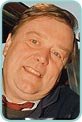
Kenneth Clarke MP - Former Chancellor of the Exchequer.
Kenneth Clarke MP
Question: Looking to the Nice summit. European summits are always billed as crucial - is this summit as important as the billing it receives?
Ken Clarke: I think it's quite important because it's essential to make some changes before enlargement. I don't think it's going to produce any results of a totally monumental or unexpected kind, so it's necessary, but not earth-shattering.
Question: Looking at some of the areas the summit will cover - qualified majority voting for instance. Do you agree that the Government needs to extend some areas of QMV - if so, which areas would you accept an extension of?
Ken Clarke: I think the member states need to extend their qualified majority voting because it's difficult enough to take decisions with 15 member states and it's going to be impossible if you don't address the problem before you get above 20 member states.
What is clear are the areas where we won't contemplate qualified majority voting, which are tax, social security, border controls, defence and treaty changes. Outside of that there's not much that is worth resisting because there are no other areas of huge national significance within the competence of the European Union that do not have majority voting already. No one country is likely to have any sensible reason for insisting on blocking a decision on these important subjects. There are a number of areas where it would be to the advantage of the United Kingdom for us to get rid of the veto of other countries.
Question: Where?
Ken Clarke: Transport regulation, because British governments of any political complexion are likely to be at the forefront of governments wanting to liberalise the rail and road networks across Europe, take away restrictions on who can drive a train, on who's lines, whether you can have through-running of railway stock and all this sort of thing.
I think that when you look at the agenda for Nice, the fact is that there are one or two countries objecting to QMV being introduced on almost every subject. My expectation at the moment is that they will come up with a list of about a dozen things where they've agreed QMV but when they are examined closely these will turn out to be of microscopic insignificance and I don't think QMV is going to be taken into any great new area. On transport for example, I think the French and the Greeks will not back down and will continue to block it.
Question: What should the Government be aiming for in their negotiations over voting powers?
Ken Clarke: They should be aiming for a pattern of voting which more accurately reflects the respective size of countries. John Major tried very hard to do this at an EU summit in Greece. He had a very hard time when he came back because he had tried to hold out at the summit, saying the respective weight of votes should be sorted out there. In the end however, we found ourselves isolated at this Greek Summit and had to back down as we were in danger of being accused of blocking the admission of Sweden and Finland, so we had to give way. I remember a very embarrassing scene in the House of Commons where John Major was accused of marching up the hill and marching down again and Tony Blair said Major was "weak weak weak". We put it all off and now it has definitely got to be resolved before we enlarge further.
There are two problems with the weight of voting. One is do we agree that Germany should have more votes than France and Britain. When I was a Minister I was rather prepared to concede that and it used to be the French who were opposed to it. My understanding from the newspapers is that the French are now more relaxed and it's our Government which wishes to show the British press that it can be macho on occasion and is resisting it.
Question: Do you think the Government should be macho over Germany?
Ken Clarke: I think they should resolve it. I think it is going to be quite difficult to resolve. No I don't think they should be macho over this. I personally think it's obviously sensible that voting power should match population.
This issue also gives rise to the problem with the Netherlands. The Netherlands is really a mid-way country and I think the Dutch will insist on having their voting rebalanced against the Belgians and the Luxembourgers.
As I am a citizen of a big country it seems to me the obvious solution is to weight votes according to population but I've met a lot of citizens of little countries who come up with more complicated issues and I suspect, as in every democratic system, it will still tend to be slightly weighted in favour of the smaller countries in the end.
Question: A larger EU means some countries want to co-operate more closely in different areas - would you support moves for a multi-speed Europe?
Ken Clarke: I think this enhanced co-operation is rather dangerous. I would personally approach that with very very considerable caution. I hope the British Government will insist it requires the consent of the other members before six or eight states go ahead, as they put it, with integration.
The problem is you would have a two tier membership. What this would mean is some countries will start agreeing amongst themselves a particular form of European co-operation which would make it more difficult for others to join later because the rules would be settled before some other country decides to join. There is also the fear they may go into areas of policy where really we don't want a distinctive European pattern to be using the European institutions. For example, if they started having some defence structure amongst a small group of countries, that would be contrary to everybody's interest, or certainly contrary to all those countries that are deeply committed to NATO like ourselves. I hope Blair continues to be awkward about that. Again at the moment it's one of these things that people get excited about on both sides of the argument without a great deal of substance around it. When I press French politicians about the areas they intend to go in for enhanced co-operation on, they can't think of one. If six or seven countries decided to go in for enhanced co-operation, I think you would find in practise that there would be some pretty mini things that they would be prepared to contemplate.
Question: What do you make of William Hague's hostile stance towards the Nice Summit?
Ken Clarke: I think it's pointless to be too hostile. I don't understand how you can be in favour of enlargement but against treaty changes of the obvious kind at Nice. I think we need a new Treaty, we need agreement on the size of the Commission, we need an agreement on the weighting of votes and we need a bit more qualified majority voting. It's no good to turn around and say we are in favour of enlarging to central and eastern Europe but we are not going to ratify the treaty that makes it essential to pave the way to get there.
Personally, I think everybody is getting over-excited over what is yet another rather technical European Council. People are trying to find the red blood of nationalism and politics running through the corridors of a Council that will be dominated by heads of Government and their apparatchiks all thrashing out the detail of what are essentially technical and detailed changes to the treaties. I think the heads of government are also rather wasting their time with all these declarations of rights and lots of rather generalised stuff about future constitution making which is a complete diversion from the main business of the conference.
Question: Would a way of healing the Conservative divides over Europe, or more importantly the euro, be for William Hague to support moves for a single currency early in the next parliament?
Ken Clarke: I accept that we are bound to have a referendum before we enter the single currency. The Conservative party has ruled out entering the single currency in the next Parliament. I see no point in a Conservative government trying to hold a referendum in order to rush through a commitment not to join - it just boxes us in again and rules out keeping the option open while we wait to see what the experience of the single currency is or whether the economic circumstances make it obvious that it should be in Britain's interests to join.
Question: So the Conservatives should have an open mind about having a referendum on the single currency during the next parliament ?
Ken Clarke: Yes, I think you should at least keep the option open of having a referendum in order to join.
Question: What could William Hague do to persuade you to join his frontbench team?
Ken Clarke: Allow the frontbench team to hold the wide range of opinions on European policy that the Conservative Party has. At the moment we have a situation where members of the parliamentary party are allowed a completely free voice on European issues but if they join the frontbench they accept collective responsibility for the official policy. You might have to do that in government, indeed John Major spent several years trying to achieve that, but I think it is a bit of an unnecessary constraint in Opposition.
Question: Have you ruled yourself out of ever serving on a Conservative frontbench led by William Hague?
Ken Clarke: No, I never have.
Question: Do you agree with Gary Streeter - that the Conservatives have got no chance of winning the next general election?
Ken Clarke: No I think we have a good chance of winning the next election. I think the next election is bound to be held in May because Blair has completely failed to keep it secret that he intends to go in early May and can't possibly change the date now without losing face.
I think it's a very difficult election to predict because the public are apathetic and rather cynical about politicians in general and are not yet firmly attached to either major political party in adequate numbers for us to be certain who will win.
If the government has a terrible winter, which it might, as they realise the National Health Service is near to a very serious crisis, then the public could very easily throw the government out.
Question: You were a Health Secretary - isn't the NHS always in crisis in the winter
Ken Clarke: The newspapers always say it's in crisis. The level of crisis tends to rise and fall over the year. Obviously winter is the difficult time because each year we discover the weather gets colder, people get iller when it gets into winter. It's also the end of the financial year. So health authorities that are having financial problems get hit by increased demand as we get into the cold weather in the new year.
Having said that there are great differences of degree. I can remember over the last twenty years almost now going back to when I was first a Minister for Health, there were some years when we really did have a serious crisis and there were some years when it was just the usual story that the newspapers sent somebody out to get because they couldn't think of anything else to do in January.
I think the present state of affairs inside the health service, running up to this winter, is very serious indeed and could turn into a real crisis. I think quite a lot of health authorities around the country are very near to the brink of being unable to provide an adequate service.
Question: What do you make of William Hague's recent pledge to make £8 billion worth of tax cuts over three years, find eight billion in savings and to match Labour's spending on health and education?
Ken Clarke: I think all that is perfectly feasible. I personally think Labour's spending promises that they've introduced in vast quantities in the run up to the general election have been given very recklessly. I think it is absurd for the Labour party to claim that anything that falls short of Gordon Brown's full three year pledges will lead to some crisis or fallback in service to the public. I think they have slightly lost control of public spending generally and in particular they've allowed the sheer bureaucracy - the natural tendency of departments to increase, they've allowed them to get out of hand. I think any incoming Conservative government should immediately start having a public spending round for future years and try to tighten up on this. I think they will have no difficulty in finding some savings.
The key to the Conservative policy seems to me, is that we will increase the totality of public expenditure but we will increase it at a slower rate than the growth in the economy as a whole. That means the final decisions on how much we spend will have to be taken when you see how fast the economy is growing. It means you don't spend the money before you've got it which is very prudent. We commit ourselves to health, we commit ourselves to education spending at these huge levels the Labour government have announced, that means you look for savings elsewhere. As soon as you prudently can there will be some room for some tax cuts.
Question: Do you think there is a moral case for tax cuts?
Ken Clarke: I'm not one of these people who go around preaching morality. I do think you should always approach public spending on the basis that the money has been earned by the individual and by business and the government has a duty not to take anymore than is legitimately required for the kind of public services that a modern society requires. Any Chancellor of the Exchequer has the duty to turn a deaf ear to a lot of the insatiable demands for ever more public spending which come from his spending colleagues who have been driven on by all kinds of special interest lobbies.
|